WhatsApp Loan Collection: How to Automate Payment Reminders in 2026
Learn how to automate WhatsApp loan collection reminders, reduce manual follow-ups, and improve repayment rates. A complete guide for NBFCs and private lenders in 2026.
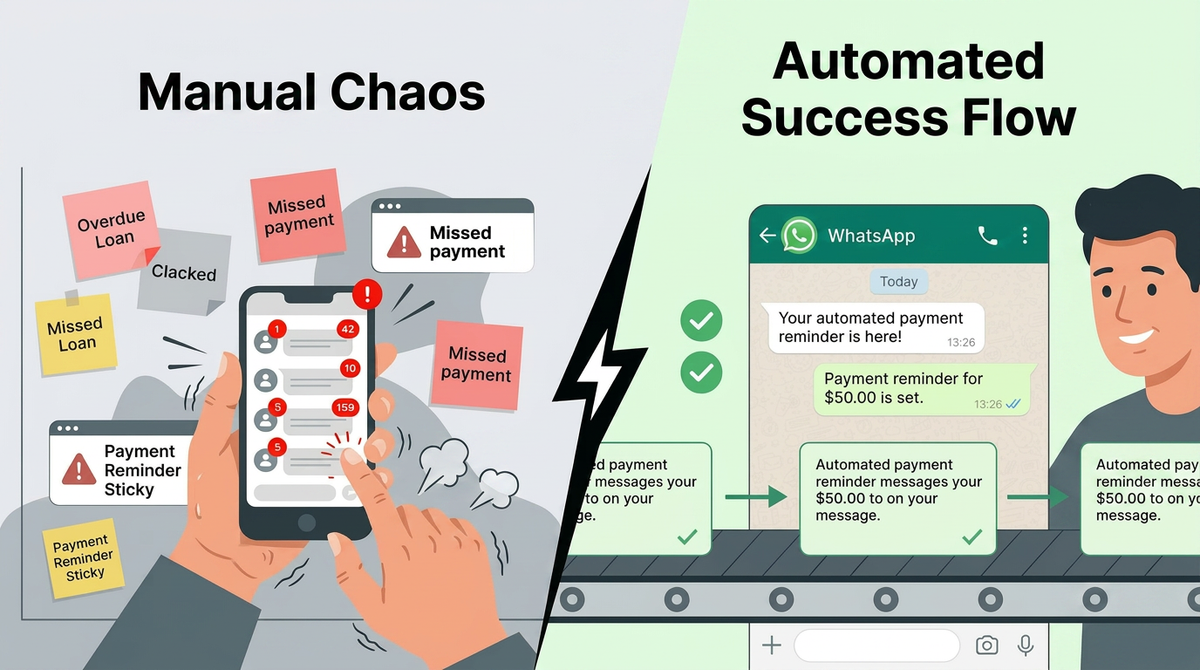
If you're spending hours every week manually sending WhatsApp messages to chase loan payments, you're not alone. Most individual lenders and small NBFCs start with manual follow-ups because it feels personal and direct. But as your portfolio grows beyond 50 borrowers, this approach becomes unsustainable.
WhatsApp loan collection automation can save you 10-15 hours per week while improving your repayment rates. This guide shows you exactly how to set up automated payment reminders that work for real lending businesses in 2026.
Why WhatsApp Works for Loan Collections
WhatsApp has become the primary communication channel for business in India and many emerging markets. Your borrowers check WhatsApp multiple times daily, making it more effective than email or traditional SMS for payment reminders.
High Open Rates: WhatsApp messages have a 98% open rate compared to 20% for emails. Your payment reminders actually get seen.
Personal Connection: Borrowers recognize your business number and trust WhatsApp messages more than automated SMS from unknown numbers.
Rich Media Support: You can send payment links, QR codes, and even voice messages to make payments easier for borrowers.
Two-Way Communication: Borrowers can respond directly to ask questions or confirm payments, reducing confusion.
Cost Effective: WhatsApp Business API costs significantly less than traditional SMS for bulk messaging.
The key is moving from manual messaging to automated workflows that maintain the personal touch while saving your time.
The Problem with Manual WhatsApp Follow-ups
Most lenders start with a simple approach: maintaining a spreadsheet of due dates and manually sending WhatsApp reminders. This works when you have 10-20 borrowers, but creates serious problems as you scale.
Time Drain: Sending individual messages to 100+ borrowers takes 3-4 hours daily. You end up spending more time chasing payments than growing your business.
Inconsistent Messaging: Different messages for different borrowers leads to confusion. Some get gentle reminders while others get stern warnings for the same payment status.
Missed Follow-ups: When you're busy with disbursements or other work, payment reminders get delayed or forgotten entirely.
No Documentation: Manual WhatsApp messages leave no audit trail for compliance or dispute resolution.
Borrower Confusion: Without systematic reminders, borrowers forget due dates and payment amounts, leading to partial payments or delays.
The solution isn't to hire more staff for manual follow-ups. It's to automate the process while maintaining the personal connection that makes WhatsApp effective.
How WhatsApp Automation Works for Lenders
WhatsApp automation for loan collection works through the WhatsApp Business API, which connects your loan management system to WhatsApp's messaging infrastructure.
Trigger-Based Messaging: The system automatically sends messages based on specific events like upcoming due dates, missed payments, or partial payments.
Personalized Content: Each message includes the borrower's name, loan amount, due date, and payment details pulled from your loan management system.
Scheduled Delivery: Messages are sent at optimal times when borrowers are most likely to see and respond to them.
Response Handling: The system can recognize common responses like "paid" or "will pay tomorrow" and update your records accordingly.
Escalation Workflows: If a borrower doesn't respond to initial reminders, the system can automatically send follow-up messages with different tones or escalate to phone calls.
Here's how a typical automated workflow looks:
- 7 days before due date: Friendly reminder with payment amount and due date
- 3 days before due date: Second reminder with payment link or instructions
- 1 day before due date: Final reminder with clear payment deadline
- Day after due date: Overdue notice with late fee information
- 3 days overdue: Stern reminder with consequences for continued non-payment
- 7 days overdue: Final notice before escalation to phone calls or field visits
Setting Up Automated Payment Reminders
Setting up WhatsApp automation requires three components: WhatsApp Business API access, a loan management system, and message templates.
WhatsApp Business API Setup: You'll need to apply for WhatsApp Business API access through an approved Business Solution Provider. This process typically takes 2-3 weeks and requires business verification.
Message Template Approval: WhatsApp requires pre-approval for all automated message templates. You'll need to submit templates for different scenarios (reminders, overdue notices, payment confirmations) and wait for approval.
Integration with Loan Management: Your loan management system needs to connect with the WhatsApp API to pull borrower data and trigger messages based on payment schedules.
Testing and Refinement: Start with a small group of borrowers to test message timing, content, and response handling before rolling out to your entire portfolio.
Most individual lenders find it easier to use a complete loan management platform that includes WhatsApp automation rather than building custom integrations. This approach gets you up and running in days rather than months.
Best Practices for WhatsApp Collection Messages
Effective WhatsApp collection messages balance firmness with respect. Your goal is to prompt payment while maintaining the borrower relationship.
Use Clear, Simple Language: Write messages in the local language your borrowers prefer. Avoid complex financial terms or legal jargon.
Include Specific Details: Always mention the exact amount due, due date, and loan account number. This prevents confusion and shows you're tracking their account carefully.
Provide Payment Options: Include multiple ways to pay (bank transfer, UPI, cash deposit) with clear instructions for each method.
Set Clear Expectations: Explain what happens if payment is delayed, including late fees or other consequences.
Maintain Professional Tone: Even for overdue accounts, keep messages professional and respectful. Aggressive or threatening language can damage relationships and may violate regulations.
Example Early Reminder:
"Hi [Name], your EMI of ₹[Amount] for loan #[Account] is due on [Date]. You can pay via UPI to [UPI ID] or visit our office. Reply PAID once done. Thank you!"
Example Overdue Notice:
"Dear [Name], your EMI of ₹[Amount] for loan #[Account] was due on [Date] and is now overdue. Please pay immediately to avoid late charges. Contact us if you need assistance."
Legal and Compliance Considerations
Automated WhatsApp collection must comply with local regulations and WhatsApp's own policies to avoid account suspension or legal issues.
RBI Guidelines: In India, the Reserve Bank of India has specific guidelines for digital lending and collection practices. Automated messages must not be threatening, abusive, or sent at inappropriate hours (typically 8 AM to 8 PM).
WhatsApp Policies: WhatsApp Business API has strict spam policies. You can only send automated messages to customers who have opted in, and you must provide easy opt-out options.
Data Protection: Store all message logs and borrower consent records. This documentation is important for compliance audits and dispute resolution.
Frequency Limits: Don't overwhelm borrowers with too many messages. A maximum of one automated reminder per day for overdue accounts is generally appropriate.
Opt-Out Mechanism: Always include instructions for borrowers to stop receiving automated messages if they prefer phone calls or in-person communication.
Documentation Requirements: Maintain audit trails of all automated messages sent, including timestamps, delivery status, and borrower responses. This documentation satisfies NBFC and microfinance regulatory requirements.
Measuring Success: Key Metrics to Track
Track specific metrics to understand how WhatsApp automation improves your collection performance.
Message Delivery Rate: What percentage of your WhatsApp messages are successfully delivered? Low delivery rates might indicate phone number issues or WhatsApp blocks.
Response Rate: How many borrowers respond to your automated messages? Higher response rates indicate better message content and timing.
Payment Rate After Reminder: What percentage of borrowers pay within 24-48 hours of receiving a reminder? This is your most important metric.
Time Saved: Calculate hours saved by comparing manual follow-up time to automated messaging. Most lenders save 10-15 hours per week.
Default Reduction: Compare default rates before and after implementing automation. Consistent reminders typically reduce defaults by 15-25%.
Collection Efficiency: Measure total collections as a percentage of amounts due. Automated reminders should improve this ratio over time.
Track these metrics monthly to identify trends and optimize your messaging strategy.
Choosing the Right WhatsApp Automation Tool
Several options exist for WhatsApp loan collection automation, each with different strengths and limitations.
Standalone WhatsApp Tools: Basic automation platforms that only handle messaging without loan management features. These require manual data entry and don't integrate with your borrower records.
Complete Loan Management Platforms: Full-featured systems that combine borrower tracking, payment scheduling, and WhatsApp automation in one platform. These offer better integration but may have higher costs.
Custom Development: Building your own WhatsApp integration gives maximum control but requires significant technical expertise and ongoing maintenance.
Key Features to Look For:
- Pre-built message templates for common scenarios
- Integration with your existing borrower database
- Automated scheduling based on payment due dates
- Response handling and borrower communication logs
- Compliance features like opt-out management and message archiving
- Multi-language support for your borrower base
- Reporting and analytics on message performance
For most individual lenders and small NBFCs, a complete loan management platform with built-in WhatsApp automation provides the best balance of features, ease of use, and cost-effectiveness.
Beyond WhatsApp: Multi-Channel Collection Strategy
While WhatsApp is highly effective, the most successful lenders use it as part of a broader collection strategy that includes multiple communication channels.
SMS Backup: Send SMS reminders to borrowers who don't use WhatsApp regularly or have delivery issues.
Voice Calls: Escalate to personal phone calls for high-value overdue accounts or borrowers who don't respond to messages.
Email Notifications: For borrowers who prefer formal communication, especially business loan customers.
In-App Notifications: If you provide a borrower-facing mobile app, push notifications can complement WhatsApp reminders.
Field Visits: For seriously delinquent accounts, combine automated messaging with in-person collection efforts.
The key is creating escalation workflows that automatically move borrowers through different communication channels based on their response and payment behavior.
Platforms like Freebird at usefreebird.com combine WhatsApp automation with SMS reminders, borrower mobile apps, and field staff coordination to create comprehensive collection workflows that adapt to each borrower's preferences and payment patterns.
Frequently Asked Questions
How much does WhatsApp Business API cost for loan collection?
WhatsApp Business API pricing varies by provider and message volume. Expect to pay ₹0.50-2.00 per message depending on your volume and the business solution provider you choose. Most lenders find this significantly cheaper than manual follow-up costs.
Can I use regular WhatsApp Business instead of the API?
Regular WhatsApp Business doesn't support automation or integration with loan management systems. You'll still need to send messages manually, which defeats the purpose of automation. The API is required for true automated collection workflows.
What happens if borrowers block my WhatsApp number?
Blocked numbers show as undelivered messages in your system. You'll need to switch to SMS, phone calls, or in-person contact for these borrowers. Maintain alternative contact methods for all borrowers to handle this situation.
How do I handle borrowers who respond with payment promises?
Set up automated responses for common replies like "will pay tomorrow" that acknowledge the message and set follow-up reminders. For complex responses, route them to your team for personal handling while maintaining the conversation history.
Is WhatsApp automation legal for debt collection in India?
Yes, when done properly. Follow RBI guidelines for digital lending, respect WhatsApp's business policies, obtain proper consent, and maintain documentation. Avoid threatening language and respect communication timing restrictions.
How quickly can I set up WhatsApp automation for my loan portfolio?
With a complete loan management platform, you can start sending automated reminders within 7-10 days. Custom development takes 2-3 months. WhatsApp Business API approval typically takes 2-3 weeks regardless of your chosen approach.
What's the best time to send automated payment reminders?
Most lenders find 10 AM to 6 PM works best for payment reminders. Avoid early morning (before 8 AM) and late evening (after 8 PM) messages. Test different times with your borrower base to find optimal delivery windows.
Conclusion
WhatsApp loan collection automation transforms how you manage borrower relationships and payment collection. Instead of spending hours daily on manual follow-ups, you can focus on growing your lending business while automated systems handle routine payment reminders.
The key is choosing the right approach for your portfolio size and technical capabilities. Most individual lenders and small NBFCs benefit from complete loan management platforms that combine borrower tracking, automated WhatsApp reminders, and compliance features in one system.
Start by documenting your current manual process, then identify which messages can be automated while maintaining the personal touch that makes WhatsApp effective for your borrowers.
Learn more about comprehensive loan management and WhatsApp automation at usefreebird.com.