Private Lender Software: The Complete Buyer's Guide for 2026
The Software Decision That Could Make or Break Your Lending Business
Your private lending operation is successful, but your systems are becoming the bottleneck. Spreadsheets freeze at the worst moments. You're juggling payment tracking across three different platforms. Important borrower messages get buried in your inbox.
The right private lender software transforms a manual operation into something that actually scales. Pick the wrong one, and you're looking at months of rebuilding workflows while faster competitors close the deals you're missing.
This guide cuts through vendor marketing to focus on what actually moves the needle in private lending. You'll learn which features are worth paying for, how to tell apart vendors who deliver from those who just demo well, and which implementation mistakes trip up even solid software rollouts.
Why Private Lenders Need Specialized Software
Bank loan management systems miss the mark for private lenders. Banks optimize for regulatory compliance and standardized processes. Private lenders win on speed, flexibility, and personal relationships.
Your challenges are different, and generic solutions don't address them:
Speed is Everything: Private lending succeeds on quick decisions and fast closings. You need software that supports rapid underwriting, instant document generation, and immediate borrower communication.
Every Deal is Different: Custom terms, variable rates, unique collateral arrangements—your loans don't fit standard templates. Your software needs to handle complexity without breaking down.
Strong Relationships Generate Repeat Business: Borrower satisfaction and referrals are the lifeblood of your business. The right tools help you track every conversation, remember personal details, and keep the human touch that brings clients back. And when you can see your entire portfolio at a glance—from high-performing assets to emerging risks—you make sharper decisions without the lag.
Compliance Without the Red Tape: You need to meet regulatory standards, but you can't let compliance slow you down the way it does at larger institutions.
Essential Features Every Private Lender Software Must Have
Loan Origination and Management
Your platform should handle everything from initial application to final payoff. The best systems include:
- Flexible loan products that adapt to any deal structure
- Automatic payment calculations and amortization schedules
- Document generation with integrated e-signatures
- Self-service borrower portals
- Seamless ACH and payment processing
Great platforms make complex loan setup feel simple while preserving the flexibility you need for unique deals.
Payment Tracking and Collections
Late payments destroy cash flow. Your software needs powerful payment management:
- Multi-channel payment reminders (email, SMS, phone calls)
- Automatic late fee calculations and assessment
- Complete payment history with detailed reporting
- Multiple payment processor connections
- Structured collections workflows
The best systems maintain borrower relationships while ensuring payments arrive on time.
Portfolio Analytics and Reporting
Data separates thriving lenders from struggling ones. Look for:
- Live portfolio performance dashboards
- Cash flow forecasting and analysis
- Delinquency tracking with trend analysis
- Loan-type profitability breakdowns
- Compliance reporting automation
- Customizable reporting tools
Choose platforms that deliver insights, not just data dumps.
Borrower Communication Tools
Strong communication prevents problems and builds loyalty:
- Automated notification systems
- Two-way messaging capabilities
- Complete communication histories
- Multi-channel outreach coordination
- Professional message templates
The most effective systems feel personal while maintaining consistency.
Security and Compliance
Financial data requires serious protection. Essential security features:
- Bank-grade encryption everywhere
- Granular access controls
- Complete audit trails
- Regular security certifications
- Automated compliance monitoring
- Secure document management
Never compromise security for convenience. A single breach can end your business.
Evaluating Software Vendors: The Right Questions to Ask
Technical Capabilities
Integration Power: "Which systems connect easily, and how hard are custom integrations?" Look for robust APIs and existing connections to accounting software, payment processors, and document systems.
Growth Handling: "How does performance change as loan volume increases?" Get specific metrics and examples from similar-sized lenders.
Mobile Functionality: "What works on mobile devices?" Your team and borrowers need full access from anywhere.
Data Migration: "What's involved in moving our existing loans?" Understanding this process prevents implementation surprises.
Support and Implementation
Timeline Reality: "How long does implementation actually take, and what do we need to provide?" Realistic expectations prevent operational disruption.
Training Depth: "What training comes included, and how do you ensure adoption?" Great software fails if your team doesn't embrace it.
Support Access: "Which support channels exist, and what are your response commitments?" When systems fail, every minute costs money.
Update Management: "How often do updates roll out, and how are they deployed?" You want a vendor that's actively improving the product—but not one whose updates knock out your operations mid-day.
Business Model and Pricing
Pricing Structure: "How does pricing change as we grow?" Per loan, per user, per transaction, flat rate—each model hits differently as you scale, so understand what you're signing up for.
Contract Terms: "What are minimum commitments and exit policies?" Avoid locking yourself into long agreements until you've seen the platform perform in the real world.
Hidden Fees: "What extra costs exist for setup, training, integrations, or support?" Get the full financial picture before you sign anything.
Top Private Lender Software Platforms in 2025
Enterprise Solutions
Nortridge Loan System: Comprehensive platform for larger operations. Extensive customization options but requires significant IT resources. Best for complex workflows with dedicated technical support.
Emphasys Elite: Feature-rich solution with advanced analytics. Higher investment but includes sophisticated reporting and compliance tools. Ideal for established lenders prioritizing comprehensive functionality.
Mid-Market Solutions
LendingPad: Cloud-based platform emphasizing usability and quick deployment. Strong mobile access and borrower portals. Good fit for growing lenders wanting professional features without enterprise complexity.
Loan Vision: Flexible platform with solid customization. Strong payment processing and collections integration. Works well for diverse loan portfolios.
Emerging Solutions
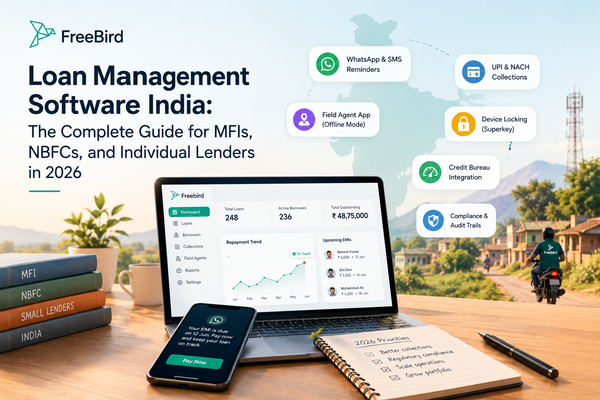
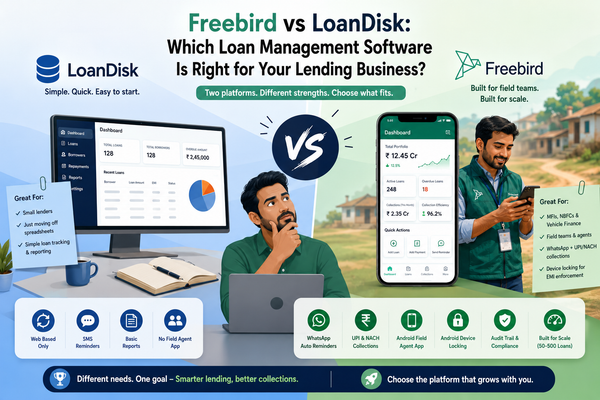
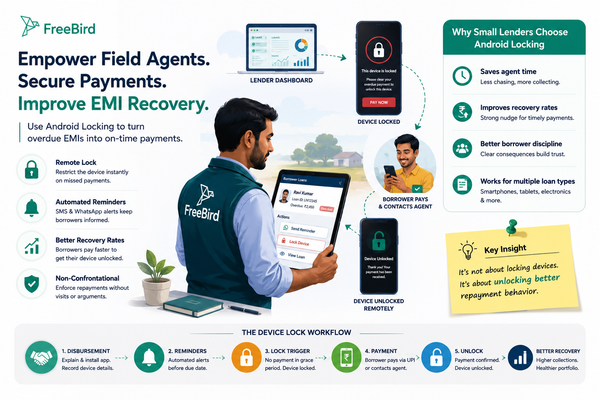
Freebird: Purpose-built for individual lenders, microfinance institutions, and NBFCs. Comprehensive loan portfolio management through web and mobile apps, featuring automated WhatsApp and SMS payment reminders. Includes innovative features like remote Android device locking for overdue payments. Transforms manual spreadsheet tracking into automated workflows with real-time cash flow visibility.
Freebird eliminates manual follow-ups while preserving the flexibility private lenders need for custom structures and borrower relationships.
Implementation Best Practices
Pre-Implementation Planning
Data Cleanup: Clean your loan data before migration. Messy data creates ongoing problems with system performance and reporting accuracy.
Process Mapping: Document current workflows before choosing software. Understanding how you work today helps identify which features matter most.
User Input: Include daily users in evaluation. They spot usability issues management often misses.
Start Small: Test with a limited number of loans first. You'll discover integration issues and training gaps without putting your entire portfolio at risk.
Change Management
Honest Communication: Tell your team why you're changing and what's in it for them. Most resistance comes from fear of the unknown, not the software itself.
Deep Training: Don't stop at basic features. When people understand what the system can really do, they get excited about using it.
Find Your Advocates: Some team members will embrace change faster than others. Let them help their colleagues—peer support often works better than formal training.
Roll Out Gradually: Don't flip everything at once. Implement features in stages so you can solve problems before they affect your entire operation.
Cost Considerations and ROI Analysis
Direct Costs
Software Licensing: Monthly or annual fees vary significantly by features and volume. Budget for growth when evaluating pricing tiers.
Implementation Services: Professional setup, data migration, and integrations often cost 50-100% of annual licensing.
Training and Support: Include both initial training and ongoing support. Poor support makes cheap software expensive.
Custom Development: Your existing systems might need additional work to connect properly.
Hidden Costs
Learning Curve Impact: New systems slow people down initially. Expect productivity dips during the transition period.
Data Cleanup Surprises: Migration often reveals data problems you didn't know existed, requiring time and resources to fix.
Process Adjustments: Standard features might not match your current workflows, which means either adapting how you work or paying for customizations—sometimes both.
Exit Barriers: The longer you run on a system, the more your processes get built around its specific features, making a future switch increasingly painful.
ROI Calculation
Time Recovery: Add up the hours your team spends on manual tasks—payment tracking, borrower follow-ups, report pulling—and multiply by your hourly labor costs. That's your baseline for what automation is worth.
Error Prevention: Think through what mistakes are actually costing you today: missed payments, compliance gaps, data entry errors. Automation doesn't eliminate all of them, but it cuts the most common ones significantly.
Scale Economics: Compare what it would cost to grow your team under your current setup versus what you'd need with automated systems handling the volume.
Missed Opportunities: Factor in deals lost to slow manual processes or limited portfolio visibility.
Most private lenders achieve positive ROI within 12-18 months with appropriate software and effective implementation.
Common Implementation Pitfalls to Avoid
Technical Mistakes
Integration Oversights: When you don't map out how your systems connect before go-live, you end up with data silos and manual workarounds that quietly eat away at the automation benefits you paid for.
Testing Shortcuts: Rushing to production without comprehensive workflow, integration, and edge-case testing creates expensive problems later.
Data Migration Failures: Migrating dirty historical data without cleanup creates ongoing reporting and performance issues.
Process Mistakes
Old Process Replication: Great implementations improve processes, not just automate existing workflows. Stay open to working differently.
Surface-Level Training: Basic feature training isn't enough. Users need to understand how software integrates into daily workflows and decisions.
Change Management Neglect: Getting the technical side right is only half the job. How your people adapt—and how well you support that transition—determines whether the investment actually pays off.
Vendor Selection Mistakes
Price-Only Decisions: The cheapest option rarely stays cheap. Limited functionality, weak support, and costly customizations have a way of closing that gap fast.
Scale Blindness: A platform that handles 50 loans smoothly might buckle under 500. Even if that kind of growth feels far off, it's worth pressure-testing now.
Reference Skipping: Demos are curated to impress. Actual customers will tell you what implementation really looked like, how support holds up under pressure, and whether they'd make the same call again.
Making Your Final Decision
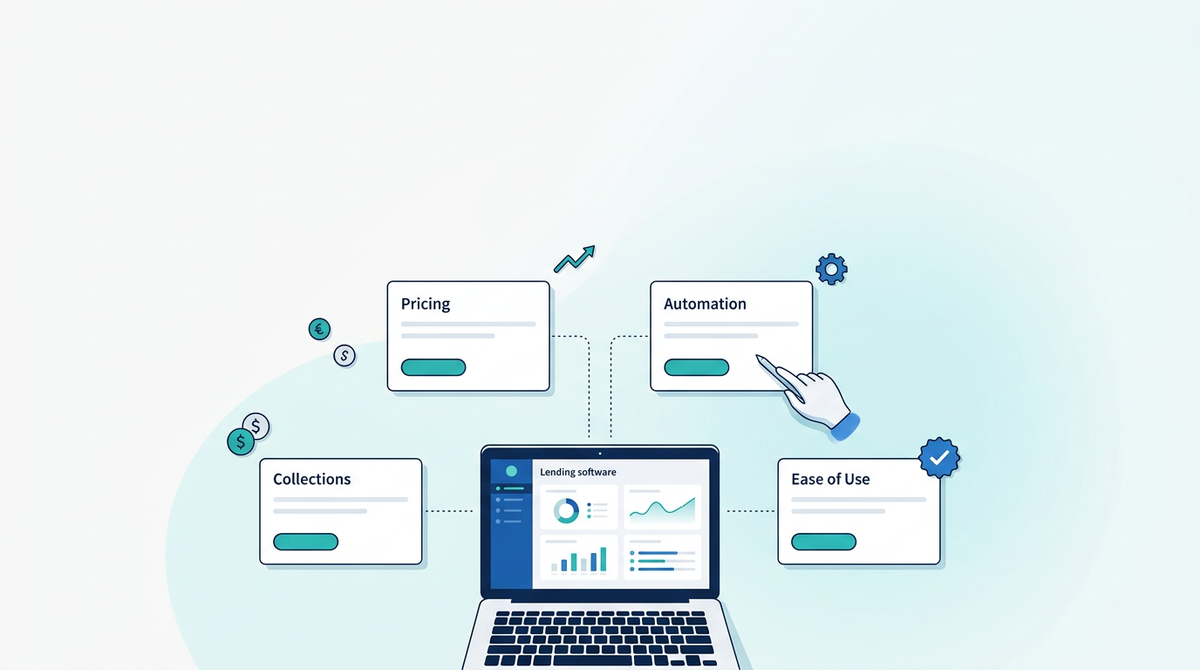
Create a Scoring Framework
Develop weighted scoring reflecting your priorities:
- Functionality (40%): How well does it meet your specific needs?
- Usability (25%): Will your team embrace it?
- Support (20%): Can you get help when needed?
- Cost (15%): Does total ownership cost make sense?
Adjust weights for your situation. Growing businesses might emphasize scalability, while established operations might prioritize advanced reporting.
Conduct Thorough Due Diligence
Reference Conversations: Talk with at least three current customers with similar business models and volumes. Ask about implementation challenges, support quality, and whether they'd choose the same vendor again.
Proof of Concept: For major investments, request proof-of-concept testing with your actual data and workflows. This reveals integration issues and usability problems before commitment.
Vendor Stability: Research financial health and market position. Software companies fail, get acquired, or change focus. Stick with vendors that have stable business models and a clear long-term position in the market.
Plan for Success
Budget Reality: In practice, implementations tend to run about 50% longer and cost about 50% more than the initial quote. Build that buffer in from the start rather than scrambling for it later.
Define Success: Nail down specific, measurable goals before you go live. Without them, it's hard to know whether the rollout is working—or where to focus when it isn't.
Prepare Your Team: Don't wait until contracts are signed to start the conversation. Teams that know what's coming—and why—tend to lean into new capabilities rather than resist them.
Your Next Steps
Private lending keeps evolving. Borrowers expect digital-first experiences, compliance requirements aren't getting simpler, and the lenders pulling ahead are the ones running leaner, faster operations. The right software puts you in that group. The wrong one becomes another obstacle to work around.
Start by mapping your current processes and writing down your biggest frustrations. That groundwork alone will sharpen the questions you ask vendors and make it easier to spot which platforms are actually built for how you work.
And once you've chosen: the software is just the starting point. The lenders who get the most out of their technology investments are the ones who plan carefully, manage the rollout with intention, and bring their teams along for the ride.
Ready to transform your lending operation? Discover how modern private lender software can streamline portfolio management, automate borrower communications, and provide real-time visibility for effective scaling at usefreebird.com.