Android Device Lock for EMI Collection: Complete Guide for Lenders 2026
Understand how Android device locking works for EMI recovery — legal framework, implementation steps, and best practices for lenders financing smartphones and consumer durables.
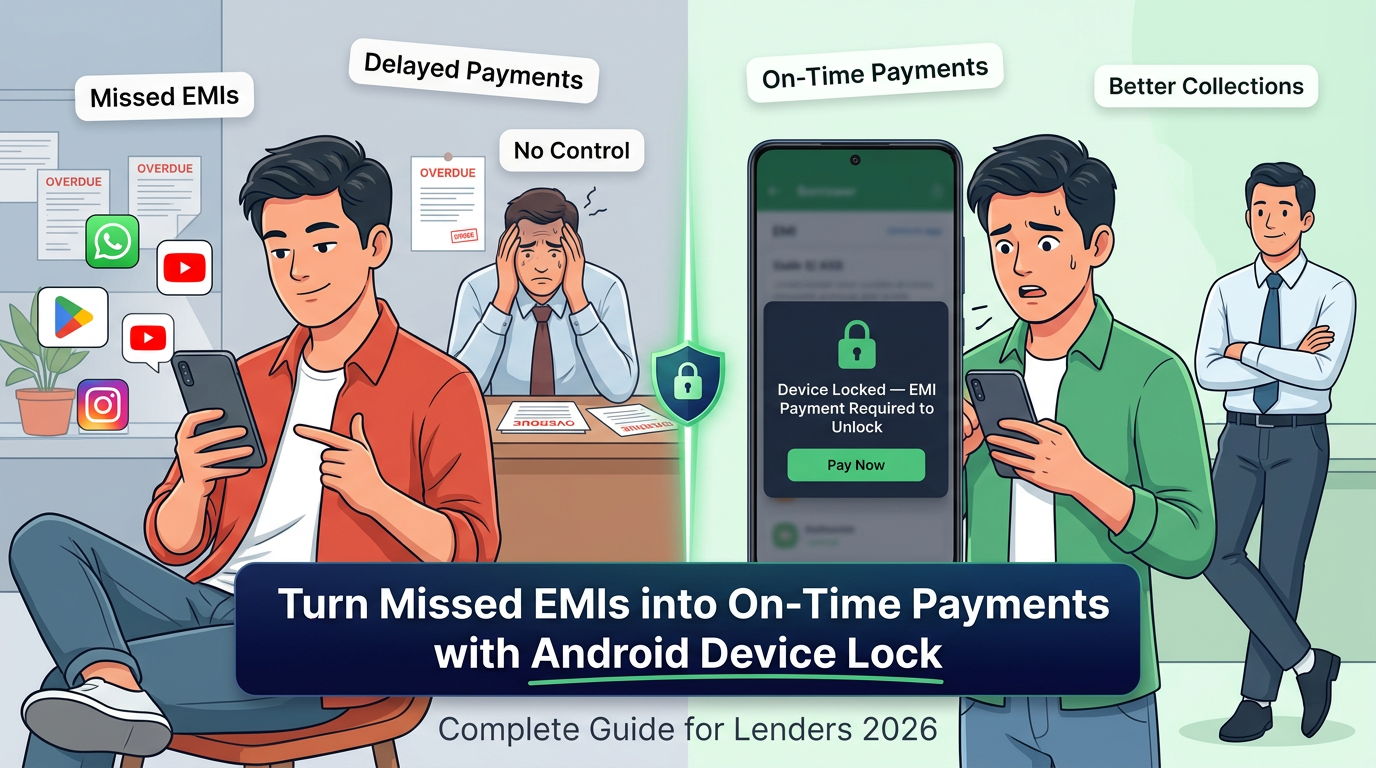
When borrowers miss EMI payments on financed mobile phones or consumer durables, traditional collection methods often fall short. Calling, texting, and field visits take time and resources while recovery rates stay low. Android device lock for EMI collection offers a direct enforcement mechanism that ties device functionality to payment status.
This technology allows lenders to remotely lock Android devices when payments become overdue and unlock them once borrowers clear their dues. For EMI-based lenders financing smartphones, tablets, or other Android devices, this creates immediate consequences for missed payments while providing borrowers a clear path to restore device access.
What is Android Device Lock for EMI Collection?
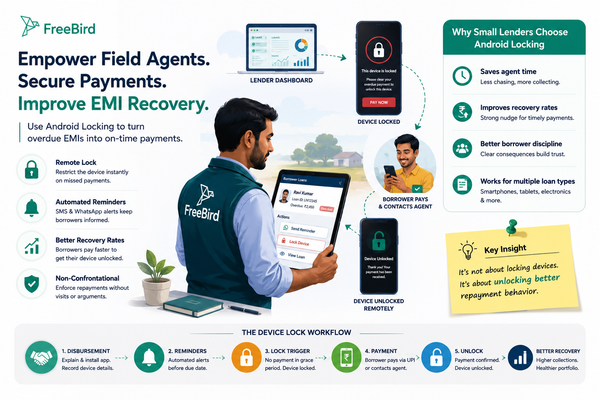
Android device lock for EMI collection is a remote enforcement technology that restricts device functionality when loan payments are overdue. The system works by installing specialized software on Android devices during the financing process. This software communicates with the lender's loan management system to monitor payment status in real time.
When an EMI payment becomes overdue, the system automatically triggers a device lock. The locked device displays payment reminders and contact information but prevents access to most apps and features. Once the borrower makes the overdue payment, the system unlocks the device within minutes.
Key Components of Device Lock Systems
Remote Lock/Unlock Capability: The core functionality that restricts and restores device access based on payment status.
Payment Status Integration: Real-time connection between the device lock system and loan management platform to track EMI payments.
Borrower Communication Interface: Screen displays that show payment information, due amounts, and contact details during lock periods.
Compliance Controls: Built-in restrictions that prevent locking during emergencies or outside permitted hours.
How Device Locking Works for EMI Recovery
The device lock process follows a structured sequence that balances collection effectiveness with borrower rights and safety requirements.
Pre-Lock Warning Phase
Before activating a device lock, the system sends multiple warnings to borrowers through SMS, WhatsApp, and on-device notifications. This warning period typically lasts 3-7 days after the EMI due date, giving borrowers time to make payments before enforcement begins.
During this phase, borrowers receive:
- Daily payment reminders via SMS and WhatsApp
- On-screen notifications showing overdue amounts
- Contact information for payment assistance
- Clear timelines for when device lock will activate
Lock Activation Process
When the warning period expires without payment, the device lock activates automatically. The locked device displays a payment screen that shows:
- Outstanding EMI amount and due date
- Payment methods and instructions
- Lender contact information
- Emergency contact options
Critical functions remain accessible during lock periods, including emergency calls, medical apps, and basic communication features required by local regulations.
Unlock and Recovery Process
Once borrowers make overdue payments, the unlock process begins immediately. Most systems unlock devices within 5-15 minutes of payment confirmation. The system verifies payment through:
- Direct integration with payment gateways
- Manual confirmation by collection staff
- Bank statement verification for cash payments
Types of Lenders Who Use Device Lock Technology
Device lock technology works best for specific types of lending businesses where the financed item is the enforcement mechanism.
Mobile Phone Retailers and Financiers
Mobile phone retailers offering EMI plans represent the largest user base for device lock technology. These businesses finance smartphones and tablets directly to consumers, making device lock a natural enforcement tool. When customers miss payments, retailers can lock the financed device while preserving their inventory investment.
Consumer Durable Lenders
Lenders financing Android tablets, smart TVs with Android OS, and other consumer electronics use device lock for EMI recovery. This applies primarily to devices with internet connectivity and Android operating systems that support remote management.
Buy Now, Pay Later (BNPL) Providers
BNPL companies offering device financing use lock technology to reduce default rates on high-value electronics. The immediate consequence of device lock creates strong incentives for timely payment compared to traditional collection methods.
Microfinance and NBFC Device Programs
Some microfinance institutions and NBFCs include device financing as part of broader financial inclusion programs. Device lock helps these lenders manage risk when extending credit to borrowers with limited credit history.
Legal Framework and Compliance Requirements
Device lock technology operates within specific legal boundaries that vary by jurisdiction. Understanding these requirements is important for compliant implementation.
Regulatory Requirements in India
In India, device lock systems must comply with RBI guidelines for fair lending practices and consumer protection. Key requirements include:
Disclosure Requirements: Lenders must clearly explain device lock terms during the loan application process. Borrowers must acknowledge understanding of lock conditions and procedures.
Emergency Access: Locked devices must maintain access to emergency services, including police, fire, and medical emergency numbers.
Operating Hours: Device locks cannot activate during night hours (typically 9 PM to 8 AM) unless specifically agreed upon in writing.
Grace Periods: Minimum grace periods must be provided before lock activation, typically 3-7 days after EMI due dates.
Consumer Protection Standards
Transparent Communication: All lock-related communications must be in local languages and clearly explain payment requirements and unlock procedures.
Reasonable Enforcement: Device locks should be proportionate to the overdue amount and loan terms. Locking high-value devices for small overdue amounts may violate fair practice codes.
Data Protection: Device lock systems must protect borrower data and comply with local privacy regulations.
Implementation Process and Technical Requirements
Implementing device lock technology requires careful planning and technical integration with existing loan management systems.
Technical Prerequisites
Android Device Compatibility: Device lock works only on Android devices running version 5.0 or higher. iOS devices cannot be locked remotely due to Apple's security restrictions.
Internet Connectivity: Devices must have internet access for lock/unlock commands to function. The system typically works over WiFi, mobile data, or SMS fallback.
Device Management Software: Specialized apps must be installed on financed devices during the sales process. These apps require device administrator permissions to function properly.
Integration with Loan Management Systems
Effective device lock implementation requires integration with comprehensive loan management platforms that track payment status and automate lock/unlock decisions.
Modern loan management systems like Freebird combine device lock functionality with automated WhatsApp and SMS reminders, real-time borrower tracking, and compliance-ready reporting. This integration ensures device locks activate only when appropriate and unlock immediately upon payment confirmation.
Setup and Configuration Process
Device Enrollment: During device sale or loan disbursement, the device management app is installed and configured with borrower and loan information.
Payment Integration: The system connects to payment gateways and loan management platforms to monitor EMI status in real time.
Compliance Configuration: Lock timing, emergency access features, and communication templates are configured according to local regulations.
Testing and Validation: Each device is tested to ensure proper lock/unlock functionality before delivery to borrowers.
Benefits and Limitations of Device-Linked EMI Collection
Device lock technology offers specific advantages for EMI collection while presenting certain limitations that lenders must consider.
Primary Benefits
Immediate Payment Incentive: Device locks create immediate consequences for missed payments, encouraging faster resolution compared to traditional collection methods.
Reduced Collection Costs: Automated device locks reduce the need for manual follow-ups, field visits, and collection agent time.
Higher Recovery Rates: Lenders report improved payment rates when device lock is available as an enforcement option.
Real-Time Enforcement: Unlike legal remedies or asset recovery, device locks activate immediately when payments become overdue.
Key Limitations
Android-Only Compatibility: Device lock technology works only on Android devices, limiting its application for iOS-based lending.
Internet Dependency: Devices must have internet connectivity for lock/unlock commands to function, creating potential gaps in enforcement.
Regulatory Restrictions: Legal requirements for emergency access, operating hours, and grace periods limit enforcement flexibility.
Technical Complexity: Implementation requires technical expertise and ongoing system maintenance that may challenge smaller lenders.
Best Practices for Responsible Device Lock Usage
Responsible implementation of device lock technology requires balancing collection effectiveness with borrower rights and business sustainability.
Communication Best Practices
Clear Initial Disclosure: Explain device lock terms clearly during loan origination. Use simple language and local dialects to ensure borrower understanding.
Progressive Warning System: Implement multi-stage warning systems that escalate communication before activating device locks.
Multiple Contact Channels: Use SMS, WhatsApp, voice calls, and on-device notifications to ensure borrowers receive payment reminders.
Payment Assistance: Provide clear instructions for making payments and offer multiple payment methods to facilitate quick resolution.
Operational Guidelines
Reasonable Grace Periods: Allow sufficient time for borrowers to arrange payments before activating device locks, typically 3-7 days after due dates.
Emergency Considerations: Maintain emergency access features and avoid locking devices during medical emergencies or natural disasters.
Proportionate Response: Ensure device lock severity matches the overdue amount and loan terms. Avoid excessive enforcement for minor delays.
Quick Unlock Process: Implement fast unlock procedures that restore device access within minutes of payment confirmation.
Compliance Monitoring
Regular Audit Trails: Maintain detailed logs of all lock/unlock activities for compliance reporting and dispute resolution.
Staff Training: Train collection staff on proper device lock procedures and regulatory requirements.
Borrower Feedback Systems: Monitor borrower complaints and feedback to identify potential compliance issues or system problems.
Integration with Loan Management Systems
Device lock technology works best when integrated with comprehensive loan management platforms that handle the full lending lifecycle.
Essential Integration Features
Real-Time Payment Tracking: The system must monitor EMI payments in real time to trigger appropriate lock/unlock actions.
Automated Communication: Integration with WhatsApp and SMS systems ensures borrowers receive consistent payment reminders before device locks activate.
Compliance Reporting: Built-in audit trails and communication logs support regulatory reporting requirements and dispute resolution.
Multi-Channel Collections: Device lock should complement other collection methods like automated reminders, field agent coordination, and payment gateway integration.
Platforms like Freebird provide this comprehensive integration, combining device lock functionality with automated WhatsApp and SMS reminders, real-time borrower tracking, and compliance-ready reporting in a single system. This approach ensures device locks work as part of a broader collection strategy rather than a standalone enforcement tool.
Data Management Requirements
Borrower Information: Complete borrower profiles with contact information, loan terms, and payment history.
Device Registry: Detailed records of financed devices, including model, IMEI numbers, and lock software versions.
Payment Integration: Real-time connection to payment gateways, bank accounts, and cash collection systems.
Communication Logs: Complete records of all borrower communications for compliance and dispute resolution.
Alternative Collection Methods vs Device Locking
Device lock technology represents one option in a broader toolkit of EMI collection methods. Understanding when to use device locks versus alternative approaches helps lenders optimize recovery strategies.
Traditional Collection Methods
SMS and WhatsApp Reminders: Automated payment reminders remain the first line of collection for most lenders. These methods work for all borrowers regardless of device type and maintain positive borrower relationships.
Voice Call Campaigns: Personal contact through phone calls provides flexibility for payment negotiations and hardship discussions that device locks cannot offer.
Field Agent Visits: In-person collection visits allow for complex problem-solving and payment arrangement discussions that automated systems cannot handle.
When Device Lock Works Best
Device lock technology proves most effective for:
- High-value device financing where the locked item has significant utility value
- Borrowers with consistent payment patterns who experience temporary delays
- Situations where traditional collection methods have failed to generate response
- Loans secured by the financed device itself
When Alternative Methods Are Preferable
Traditional collection methods work better for:
- Borrowers facing genuine financial hardship requiring payment restructuring
- Complex collection situations requiring negotiation and problem-solving
- Loans not secured by Android devices
- Borrowers who respond well to personal communication
Future of Device-Linked EMI Collection
Device lock technology continues to evolve with advances in mobile technology and changing regulatory environments.
Emerging Technology Trends
IoT Device Integration: Future systems may extend device lock capabilities to connected appliances, vehicles, and other IoT devices beyond smartphones and tablets.
Artificial Intelligence: AI-powered systems could optimize lock timing based on borrower behavior patterns and payment probability models.
Blockchain Integration: Distributed ledger technology might provide transparent, tamper-proof records of lock/unlock activities for enhanced compliance.
Regulatory Evolution
Standardized Guidelines: Regulators are developing more specific guidelines for device lock usage, including standardized disclosure requirements and operational limits.
Consumer Protection Enhancement: New regulations may expand emergency access requirements and limit lock activation conditions.
Cross-Border Compliance: International lending operations will require device lock systems that comply with multiple regulatory frameworks simultaneously.
Market Development
Platform Consolidation: The market is moving toward comprehensive loan management platforms that integrate device lock with other collection tools rather than standalone lock systems.
Industry Specialization: Different device lock solutions are emerging for specific industries like mobile retail, consumer electronics, and vehicle financing.
Risk Management Integration: Future systems will better integrate device lock decisions with overall credit risk models and borrower relationship management.
Learn more about comprehensive loan management solutions that include device lock functionality at usefreebird.com.
FAQs
Can device lock be used on iPhones and iOS devices?
No, device lock technology works only on Android devices. Apple's iOS security architecture prevents remote device locking by third-party applications. Lenders financing iPhones must rely on traditional collection methods like automated reminders, calls, and field visits.
How quickly do devices unlock after payment is made?
Most device lock systems unlock devices within 5-15 minutes of payment confirmation. The exact timing depends on payment method verification and system processing speed. Direct digital payments typically unlock faster than cash payments that require manual confirmation.
What happens if a borrower needs emergency access during a device lock?
Device lock systems must maintain access to emergency services including police, fire, and medical emergency numbers. Most systems also allow access to basic communication features and medical apps as required by local regulations. Lenders can manually unlock devices for genuine emergencies.
Is device lock legal in all countries?
Device lock legality varies by jurisdiction. Countries like India have specific regulations governing device lock usage, including disclosure requirements, grace periods, and emergency access provisions. Lenders must ensure compliance with local laws before implementing device lock technology.
Can borrowers remove or bypass device lock software?
While technically possible, removing device lock software typically requires advanced technical knowledge and may void device warranties. Most device lock systems include tamper detection that alerts lenders to removal attempts. However, determined users with technical expertise may find ways to bypass these systems.
What types of loans work best with device lock technology?
Device lock works best for loans secured by the Android device itself, such as mobile phone EMI plans, tablet financing, and consumer electronics loans. It's less effective for unsecured personal loans or loans where the financed item is not the enforcement mechanism.
How does device lock affect borrower relationships?
Device lock can strain borrower relationships if not implemented thoughtfully. Clear initial disclosure, reasonable grace periods, and quick unlock processes help maintain positive relationships. Many lenders find that transparent communication about device lock terms actually improves trust by setting clear expectations upfront.
Conclusion
Android device lock for EMI collection provides a powerful enforcement tool for lenders financing Android devices. When implemented responsibly with proper legal compliance, clear borrower communication, and integration with comprehensive loan management systems, device lock technology can significantly improve collection rates while reducing operational costs.
Success with device lock requires understanding its limitations, including Android-only compatibility and regulatory restrictions. The technology works best as part of a broader collection strategy that includes automated reminders, personal communication, and flexible payment options.
For lenders considering device lock implementation, choosing a platform that integrates lock functionality with complete loan management capabilities ensures optimal results while maintaining compliance and borrower relationships.