Freebird Free Trial: What You Can Test in 7 Days and How to Get the Most Out of It
Most lending software asks you to commit before you really understand what you're buying. A demo call, a sales pitch, a contract — and somewhere in that process, you're expected to trust that the platform will actually work for your operation.
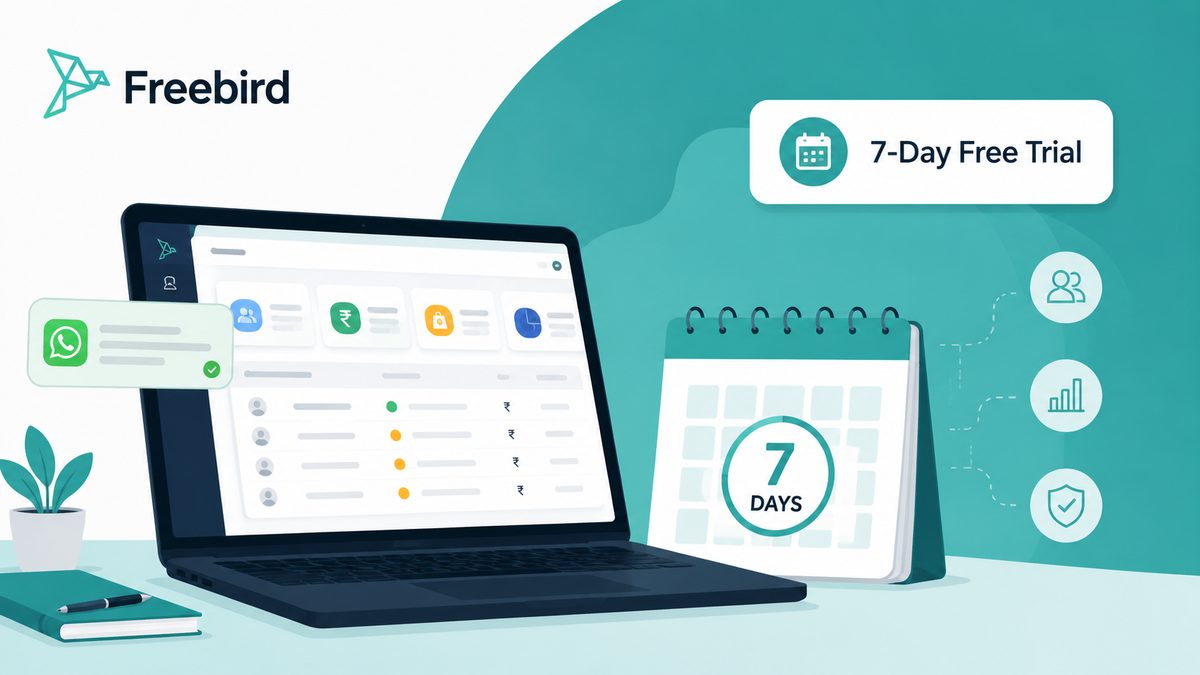
Freebird's 7-day free trial skips that. No credit card required. No sales call before you can log in. You get full access to the platform and seven days to decide whether it fits how you run your lending business.
This guide walks you through what to test, in what order, and how to make a genuinely useful evaluation before the trial ends.
What the Free Trial Actually Includes
The trial gives you access to Freebird's loan management platform across web, Android, and iOS. This isn't a stripped-down demo environment — you can add real borrowers, create real loan records, and run the platform the way you'd actually use it day to day.
Freebird has three plan tiers: Lite (up to 50 active loans), Professional (up to 500 active loans), and Team (unlimited active loans). The trial covers all plans, so what you're testing reflects the full product, not a limited preview.
After the trial, billing is month-to-month with no long-term contracts. A lifetime purchase option has also been confirmed by existing users — worth asking about when you speak to the team.
Day 1–2: Set Up Your Borrower Portfolio
Start by adding a handful of real borrowers — not dummy data. Use actual names, loan amounts, and EMI (equated monthly installment) schedules from your current portfolio.
The reason is simple: loan management software only proves its value when you're looking at your own numbers. A spreadsheet with fake entries tells you nothing about whether the platform saves you time.
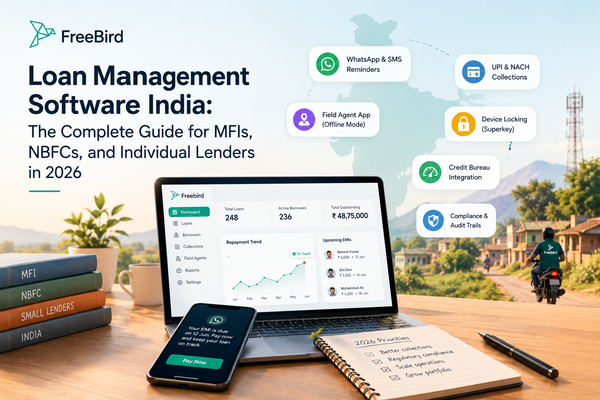
Set up three to five active loans with different repayment schedules, and include at least one overdue account if you have one. This gives you a realistic view of how the dashboard surfaces your portfolio — which loans are current, which are approaching their due date, and which are already past due.
By the end of day two, you should have a clear sense of whether the interface matches how you actually think about your portfolio.
Day 3: Test the Automated Reminder Flows
Manual follow-ups are where most small lending businesses lose the most time. If you're managing 50 to 200 borrowers, chasing EMI payments by phone or WhatsApp message can easily eat three to five hours a week — time that doesn't scale and doesn't stop defaults.
On day three, configure the automated SMS and WhatsApp reminder flows. Freebird sends reminders before due dates, not after missed payments. That distinction matters: a reminder two days before a due date prompts payment; a reminder three days after a missed payment starts a confrontation.
Set up a reminder sequence for one of your test borrowers. Trigger it manually if needed to see the message format and delivery. Check whether the message reads naturally in the language your borrowers use. If you're operating in India, confirm that WhatsApp delivery works with your borrower's number format.
This single feature is what most lenders say saves them the most time in their first week on the platform.
Day 4: Test Payment Collection
If you're operating in India, connect a UPI payment method. Freebird supports UPI and NACH auto-debit mandates, which means borrowers can pay directly through the platform rather than through a separate transfer you have to manually reconcile.
Test the payment recording flow. Log a repayment against one of your test loans and confirm the outstanding balance updates correctly. Check whether the audit trail captures the payment timestamp, method, and amount — this matters for compliance-friendly record-keeping, particularly if you're operating as an NBFC (non-banking financial company) or MFI (microfinance institution).
If you're outside India, test the multi-currency settings and confirm your local currency displays correctly across loan records and reports.
Day 5: Test Field Agent Features or Superkey Device Locking
This day splits depending on your business type.
If you have field agents or collection staff: Test the Android field agent app. Agents can manage collections and borrower visits from their phones, including in areas with limited connectivity. Assign a test borrower to a field agent account and check whether the agent can view their assigned portfolio, log a collection visit, and record a payment without needing desktop access. This is particularly relevant for MFIs and NBFCs whose agents operate in areas with inconsistent internet.
If you run a consumer electronics or device financing business: This is the feature that sets Freebird apart from every other loan management platform on the market.
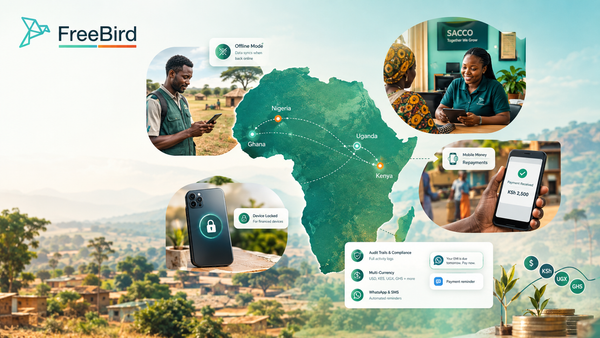
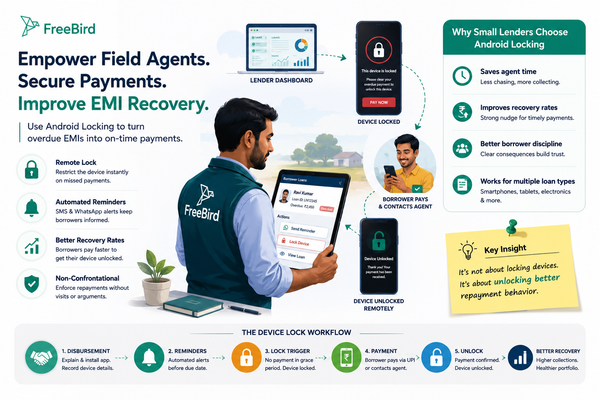
Freebird's Superkey feature remotely restricts a borrower's Android device when an EMI payment becomes overdue. The device stays restricted until the payment clears — no phone call, no confrontation, no chasing. No competitor in the loan management software space offers an equivalent mechanism. Superkey is currently available for operations in India and Africa.
To test it during the trial, you'll need an Android device to use as a test borrower device. Set up a test loan, simulate an overdue status, and trigger the lock. Confirm the restriction activates and clears correctly when a payment is recorded.
If device financing is your primary business, this test alone will tell you whether Freebird is the right fit.
If you're a solo operator with no field team and no device financing: Spend day five on compliance reporting instead. Export a loan schedule in PDF and Excel. Review whether the output would satisfy an auditor or a regulatory review — the borrower communication logs and repayment history should be complete and timestamped.
Day 6: Review the Compliance and Reporting Output
Pull the reports that matter most to your operation.
For NBFCs and MFIs, that means the borrower communication log — a complete record of every reminder sent, every payment received, and every interaction the platform has captured. This is what keeps you prepared for a regulatory review without scrambling to reconstruct records from WhatsApp threads and spreadsheets.
Export your test portfolio data in both PDF and Excel. Check whether the format is clean enough to share with an auditor, a bank, or a funding partner. Review the cash flow summary on the dashboard and confirm it matches the loan records you entered.
If the reports look right with five test loans, they'll look right with 500.
Day 7: Make Your Decision
By day seven, you should be able to answer three questions:
- Does the platform replace the manual work you're currently doing?
- Does the mobile app work reliably on the devices your team uses?
- Do the compliance reports meet the standard your operation requires?
If the answer to all three is yes, the next step is straightforward. If you're unsure about pricing, plan limits, or whether a specific feature is available in your region, this is the right moment to request a live demo. A demo call gives you a direct conversation about which plan fits your portfolio size and what the platform costs for your specific setup — no commitment required.
You can request a demo at usefreebird.com before or during your seven days if you'd prefer a guided walkthrough alongside the trial.
A Quick-Reference Trial Checklist
- Day 1–2: Add real borrowers and loan records; review the dashboard
- Day 3: Configure WhatsApp and SMS reminder flows; trigger a test reminder
- Day 4: Test UPI payment collection; record a repayment; check the audit trail
- Day 5: Test field agent features or Superkey device locking, depending on your business type
- Day 6: Export compliance reports in PDF and Excel; review borrower communication logs
- Day 7: Evaluate fit; request a demo if you have questions about pricing or plan selection
Who Gets the Most Out of the Trial
The trial is most useful if you're in one of three situations.
You've outgrown spreadsheets. Your portfolio has grown to the point where a spreadsheet no longer gives you a reliable picture of who owes what and when. Seven days is enough to know whether Freebird replaces that reliably.
You've had a recent default. A borrower missed payments and you had no automated enforcement in place. The trial lets you test the reminder flows and, where relevant, the Superkey device-locking feature against that exact scenario.
You're facing regulatory pressure. You're an NBFC or MFI that needs a proper audit trail and compliance-friendly records. The trial lets you verify that the reporting output meets the standard before you commit to anything.
FAQs
Does the Freebird free trial require a credit card?
No. The 7-day free trial requires no credit card. You can start and cancel before it ends without any charge.
What features are available during the free trial?
You get access to the full platform — borrower management, automated WhatsApp and SMS reminders, UPI and NACH payment collection, compliance-friendly reporting, and the Android field agent app. The Superkey device-locking feature is also available to test for eligible markets.
Can I use real borrower data during the trial?
Yes, and it's recommended. Testing with real loan records and real repayment schedules gives you a far more accurate picture of whether the platform fits your operation than dummy data ever will.
What happens when the trial ends?
If you decide to continue, you move to a paid plan on month-to-month billing with no long-term contract. If you don't continue, your account is not charged.
Which plan should I trial if I manage fewer than 50 active loans?
The Lite plan covers up to 50 active loans and is the right starting point for individual lenders and small MFI operators. Exact pricing is shared during a sales conversation and varies by region.
Is Superkey available in all markets?
Superkey is currently available for operations in India and Africa. If you run a consumer electronics or device financing business in either market, it's worth testing specifically during the trial period.
What should I do if I have questions during the trial?
Request a live demo at usefreebird.com. A demo call gives you direct answers on plan selection, regional feature availability, and pricing — without committing to anything.
Seven days is enough time to know whether loan management software will actually work for your business. The trial is there so you can find out on your own terms.
Start your free trial or request a live demo at usefreebird.com.