Loan Management Software for Small Lenders in 2026: What to Look For
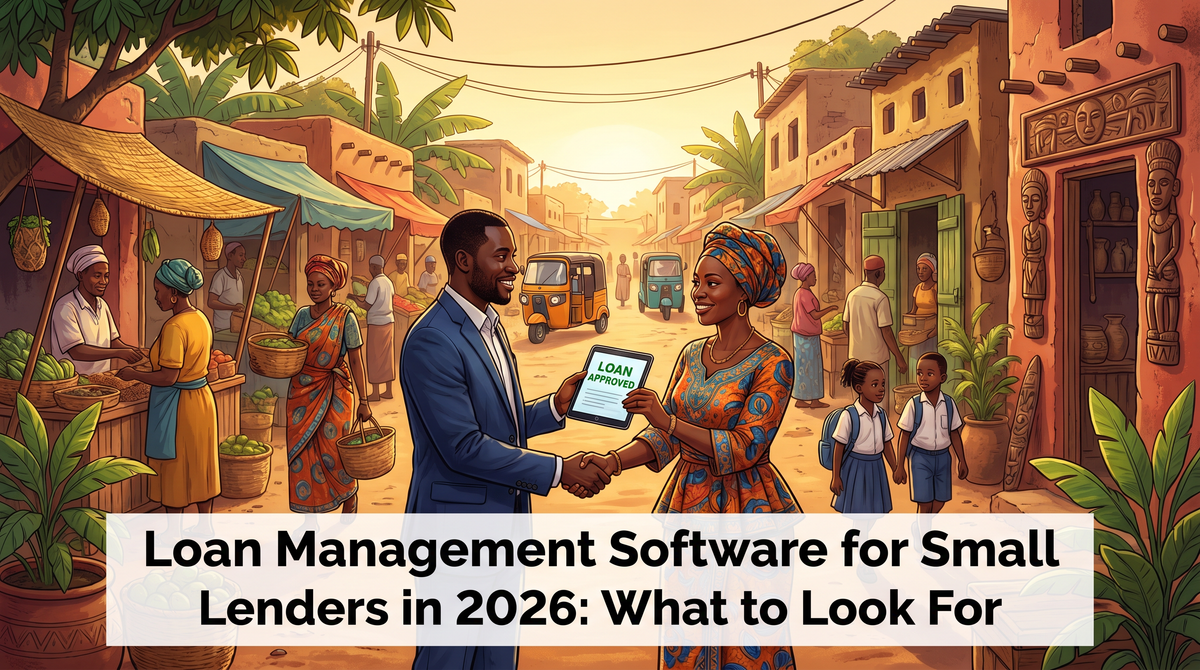
Most loan management software on the market was built for banks. If you're running a lending business with 50 to 500 active borrowers, you already know the problem: enterprise platforms are priced at $20,000+ a year, require IT teams to set up, and come with features you'll never use. Meanwhile, basic bookkeeping apps don't go far enough.
This guide covers what actually matters when evaluating loan management software in 2026 — if you're an individual lender, a microfinance institution (MFI), or a small non-banking financial company (NBFC, a regulated lender that operates outside traditional banking).
Why Spreadsheets Stop Working
A spreadsheet can handle 10 borrowers. Maybe 30, if you're disciplined. But once your portfolio grows, the cracks show fast.
You miss a follow-up. A borrower claims they never got a reminder. You can't pull a clean repayment history for an audit. Your field agent collected cash but the record didn't make it back to you until the next day.
These aren't discipline problems — they're system problems. The right loan management software solves them without adding complexity you don't need.
The Features That Actually Matter
Not every feature in a product brochure is worth paying for. Here's what to prioritize if you're a small or mid-sized lender.
Automated Payment Reminders
Manual follow-ups are the single biggest time drain in most lending operations. Calling borrowers before every due date, sending WhatsApp messages one by one, following up again when someone doesn't respond — it adds up to hours every week.
Good loan tracking software sends reminders automatically, before the due date, not after a payment is missed. SMS and WhatsApp are the two channels that actually reach borrowers in South Asia and Southeast Asia. If a platform only supports email, it's not built for your market.
Borrower Transparency Tools
Defaults often happen because borrowers lose track of what they owe. A borrower app that shows upcoming EMIs (equated monthly installments), payment history, and outstanding balance reduces disputes and keeps repayments on track.
This isn't just a convenience feature — it's a collections tool.
Field Agent Management
If you have staff collecting payments on the ground, you need a way to track their activity in real time. A field staff app for loan disbursement and collections means your agents can log payments, update records, and flag issues without waiting until end of day. You get visibility; they get a clear workflow.
This is a feature most lightweight apps skip entirely.
Compliance-Ready Reporting
If you're operating as an NBFC or MFI, regulatory audits are a reality. You need borrower communication logs, repayment histories, and audit trails that you can export cleanly. Scrambling to reconstruct records from WhatsApp threads and spreadsheets when an audit arrives is not a position you want to be in.
Look for software that generates compliance reports automatically and keeps communication logs as a standard part of the product — not a premium add-on.
Auto-Debit and Digital Payment Integration
Collecting cash manually creates reconciliation problems. Auto-debit and UPI integrations mean payments come in digitally, match to the right borrower automatically, and update your cash flow dashboard in real time. You see exactly where your portfolio stands without waiting for end-of-day reports.
Device Locking for EMI-Based Lending
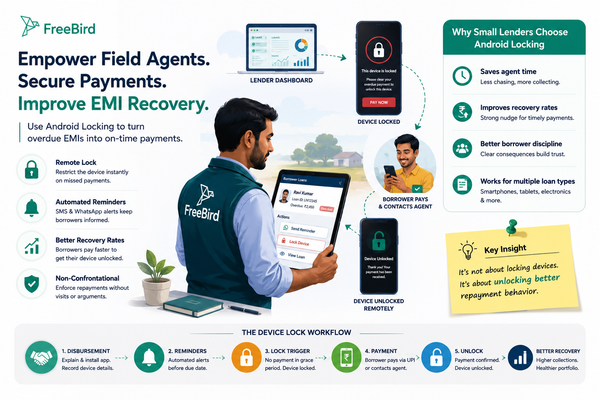
This one is specific to a particular type of lender: if you sell mobile phones, electronics, or other devices on installment plans, you need a way to enforce repayment. An Android device-locking feature that remotely restricts a borrower's device until an overdue payment clears is a meaningful deterrent — and it's something very few platforms offer.
It's not relevant to every lender, but for consumer electronics financing, it changes the risk profile of the product entirely.
What to Avoid: The Enterprise Trap
A lot of lenders make the mistake of evaluating software that was never designed for them. Here's a quick breakdown of where common options fall short for small portfolios.
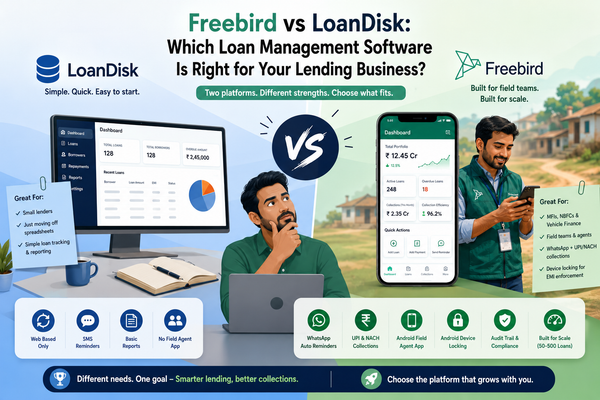
Enterprise platforms like LoanPro are built for large US-based fintechs and financial institutions. Pricing starts around $20,000–$50,000 per year. Implementation takes months and requires dedicated IT resources. There's no native WhatsApp integration, no field agent app, and no device-locking capability. If you're managing 200 loans, this isn't your tool.
Mid-market SaaS platforms like AllCloud cover the full loan lifecycle but are oriented toward larger NBFCs and banks. Pricing isn't public — you have to go through a sales process to find out. That's a signal about who they're built for.
Lightweight bookkeeping apps like Lendstack offer UPI collection and WhatsApp reminders, which is a good start. But they typically lack field agent management, compliance reporting, and any device-locking capability. They work well for very small informal lenders moving off paper, but they hit a ceiling quickly as your portfolio grows.
The gap — affordable, operationally complete software for lenders managing 50 to 500 active loans — is real. It's where most small lenders are left choosing between too much and too little.
Questions to Ask Before You Sign Up
When you're evaluating a platform, these are the questions that separate a good fit from a bad one:
- Does pricing scale with your portfolio size? Per-loan or tiered pricing is more predictable than flat enterprise contracts.
- Can you get started without a long implementation process? If setup takes weeks, you'll lose momentum.
- Is there a free trial with no credit card required? You should be able to test the product before committing.
- Does it work on mobile? Your field agents and borrowers need mobile access — web-only tools create friction.
- Does it support WhatsApp reminders natively? SMS alone isn't enough for most markets in South Asia and Africa.
- What does the compliance reporting actually look like? Ask to see a sample report before you buy.
A Platform Built for This Gap
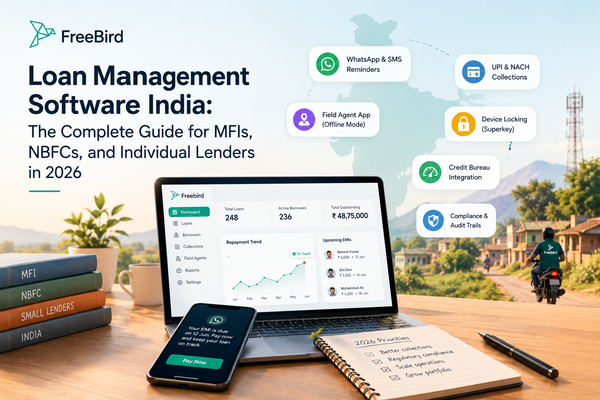
Freebird is loan management software built specifically for individual lenders, MFIs, and small NBFCs. It covers automated SMS and WhatsApp reminders, a borrower app, field agent management, auto-debit and UPI integrations, compliance-ready reporting, and optional Android device locking for EMI-based lending.
Plans are tiered by active loan volume — Lite for up to 50 loans, Professional for up to 500, and Team for unlimited portfolios. There's a 7-day free trial with no credit card required, and billing is month-to-month with no long-term contracts.
It's built for lenders who need operational depth without enterprise complexity or enterprise pricing.
FAQs
What is loan management software?
Loan management software helps lenders track borrower accounts, automate payment reminders, collect repayments, and generate compliance reports — replacing manual processes and spreadsheets.
What features should small lenders look for in 2026?
The most important features for small lenders are automated SMS and WhatsApp reminders, borrower transparency tools, field agent management, compliance-ready reporting, and digital payment integrations. Device locking is an additional priority for EMI-based consumer lenders.
Is enterprise loan management software suitable for small NBFCs?
Generally no. Enterprise platforms like LoanPro are priced at $20,000–$50,000+ per year and require dedicated IT teams for implementation. They're designed for large financial institutions, not lenders managing 50–500 active loans.
What is an NBFC?
NBFC stands for non-banking financial company — a regulated lender that provides financial services like loans and credit without holding a full banking license. NBFCs in India are regulated by the Reserve Bank of India and have specific compliance reporting requirements.
What is EMI-based lending?
EMI stands for equated monthly installment. EMI-based lending means a borrower repays a loan in fixed monthly amounts over a set period. It's common in consumer electronics financing, vehicle loans, and personal lending.
How does Android device locking work for EMI lending?
Some loan management platforms — including Freebird — offer a feature that remotely restricts an Android device's functionality when a borrower's payment is overdue. The restriction is lifted once the payment clears. It's used primarily by lenders who finance mobile phones or electronics on installment plans.
Can loan management software help with compliance audits?
Yes. Platforms with compliance-ready reporting maintain borrower communication logs, repayment histories, and audit trails that can be exported for regulatory review. This is particularly important for NBFCs and MFIs operating under formal regulatory frameworks.