How a Microfinance Lender Eliminated Manual Follow-Ups and Reduced Defaults Using Freebird
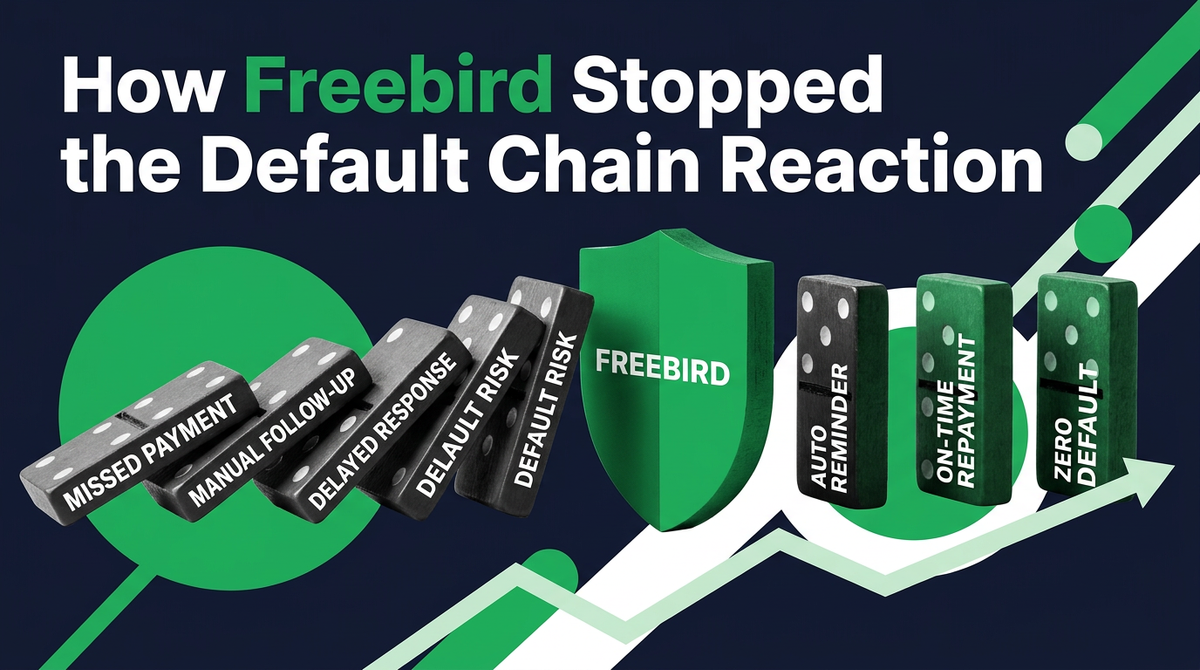
Running a microfinance institution (MFI) on spreadsheets works — until it doesn't. At some point, the portfolio grows past what one person can track, borrowers start missing payments, and the follow-up calls pile up faster than the collections come in.
This case study walks through how a small MFI operator moved from a spreadsheet-and-WhatsApp setup to a structured loan management system, what changed operationally, and what results followed. The scenario is grounded in the real problems Freebird was built to solve and reflects the experience of lenders managing 50 to 500 active borrowers.
The Starting Point: A Portfolio That Outgrew Spreadsheets
The lender in this scenario ran a microfinance operation with around 120 active borrowers. Loan amounts ranged from small working capital disbursements to slightly larger personal loans, all collected in equated monthly installments (EMIs).
The workflow was straightforward — and unsustainable. A spreadsheet tracked borrower names, loan amounts, and due dates. Every week, a staff member would manually work through the list, identify upcoming due dates, and send individual WhatsApp reminders. After the due date, they'd follow up with anyone who hadn't paid. Then follow up again.
That process consumed roughly 4 hours every week — just on reminders and follow-up calls. It left no time to look at which borrowers were consistently late, which field agents were performing, or whether the portfolio as a whole was healthy.
When a borrower defaulted on three consecutive EMIs, the lender had no audit trail of communication. No record of which reminders had been sent, when, or whether the borrower had acknowledged them. That made recovery harder and any regulatory conversation uncomfortable.
The trigger to change was that default incident, combined with a portfolio that had grown to the point where manual tracking was producing errors.
What the Lender Needed
Before evaluating any software, the lender identified three specific requirements:
- Automated reminders sent before due dates — not after missed payments
- A record of every borrower communication that could be produced if a regulator asked
- Real-time visibility into which loans were current, which were overdue, and what cash was expected that week
A fourth requirement emerged during the evaluation: the system had to work on mobile. The lender and their field staff weren't going to adopt a tool that required sitting at a desktop.
The Switch to Freebird
The lender started a 7-day free trial of Freebird — no credit card required — and imported their active borrower list within the first day.
Automated Reminders Replaced Manual Follow-Ups
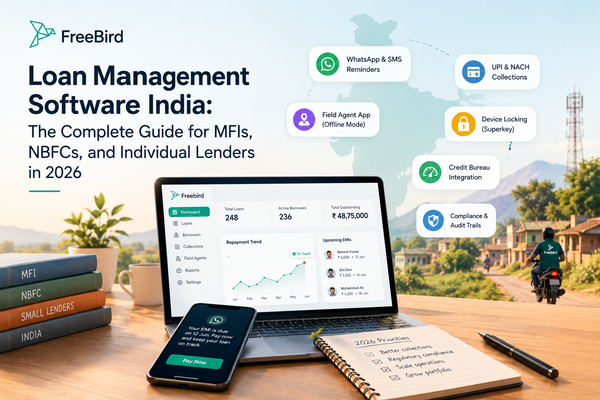
The first thing that changed was the reminder workflow. Freebird sends automated SMS and WhatsApp reminders to borrowers before their due dates. The lender configured the timing once, and the system handled the rest.
In the first month, the staff member who had been spending 4 hours a week on manual follow-ups spent under 30 minutes reviewing the dashboard instead. Reminders went out consistently, without anyone having to remember to send them.
Borrowers also got access to a mobile app showing their payment history and upcoming EMI schedule. That transparency reduced inbound calls asking "how much do I owe?" — a small but real drain on staff time.
A Complete Audit Trail From Day One
Every reminder sent through Freebird is logged automatically. The lender now has a timestamped record of every borrower communication — which message was sent, when, and through which channel.
When a borrower later disputed a late payment charge, the lender pulled up the communication log in under two minutes and showed exactly when the reminder had gone out. The dispute was resolved without escalation.
For a regulated MFI, this kind of documentation isn't optional. Compliance-ready audit trails mean that if a regulator asks for records, the answer isn't "let me find the WhatsApp thread."
Field Agent Management on Mobile
The lender had two field agents handling on-ground collections in areas with inconsistent internet. Freebird's field staff app let them log collections and disbursements from their phones, with data syncing to the central dashboard when connectivity was available.
The lender could see, in real time, which collections had been made that day and which were still outstanding. Previously, that reconciliation happened at the end of the day — sometimes the next morning — based on what agents reported verbally.
Cash Flow Visibility That Changed Planning
Before Freebird, there was no reliable way to know how much cash would arrive in a given week. The due dates were on paper, but not which borrowers would actually pay on time.
The real-time collection tracking and cash flow dashboard changed that. Expected collections for the week, actual collections to date, and which borrowers were overdue — all visible in one place. That made it possible to plan disbursements more confidently and catch problem accounts earlier.
Results After Three Months
The outcomes weren't dramatic overnight. They built over the first quarter.
Manual follow-up time dropped significantly. The 4-hour weekly routine was replaced by a 20-to-30-minute dashboard review. Automated reminders handled the first two touchpoints before a due date; staff only got involved when a borrower was genuinely overdue.
Early-stage defaults declined. Borrowers who received reminders before their due date paid on time at a higher rate than when reminders came after a missed payment. Getting ahead of the due date — rather than chasing after it — changed the dynamic.
The audit trail removed a compliance risk. The lender had previously operated without any formal record of borrower communications. That was a liability. With Freebird, every interaction was logged automatically, and records could be exported in PDF or Excel for any reporting requirement.
Field agent accountability improved. With collection activity logged in the app, the lender had visibility into what each agent was doing without daily check-in calls. Discrepancies between expected and actual collections surfaced faster.
What This Looks Like for Other MFI Operators
This scenario isn't unique. Most small MFI operators and individual money lenders managing 50 to 500 borrowers are running some version of the same manual workflow — spreadsheets, personal WhatsApp messages, and end-of-day verbal reconciliation with field staff.
The operational cost is real: 3 to 5 hours a week on follow-ups, no audit trail, and cash flow visibility that depends on memory rather than data.
Freebird's pricing is structured around portfolio size, with plans covering up to 50, up to 500, and unlimited active loans. Billing is month-to-month with no long-term contracts, which means the risk of trying it is limited to the time it takes to set up — which, for a portfolio of 120 loans, is hours, not weeks.
No dedicated IT team required. The platform runs on web, Android, and iOS. If your team uses WhatsApp and smartphones, they can use Freebird.
A Note on the Android Device-Locking Feature
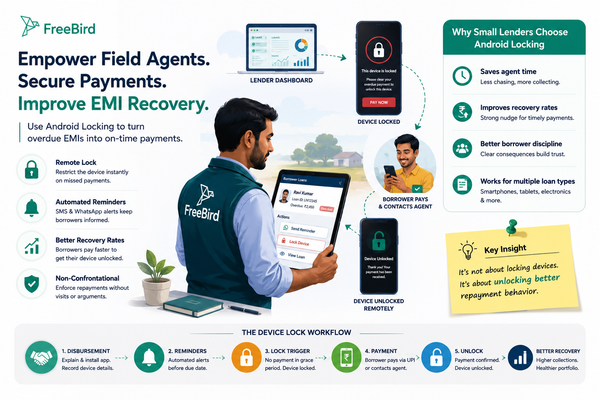
This case study focused on a microfinance lender, so the Android device-locking feature didn't come into the picture. But if your lending business involves consumer electronics or device financing — selling phones or tablets on EMI plans — it's worth understanding separately.
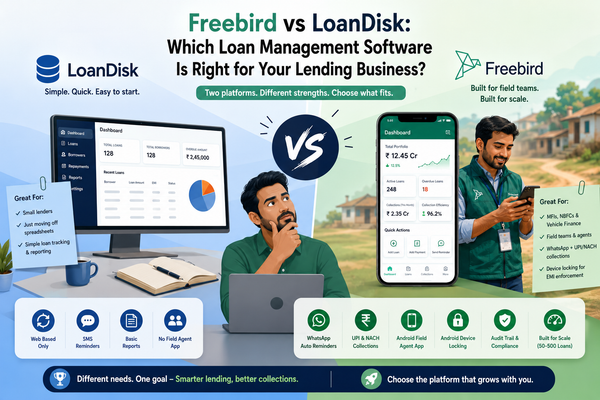
Freebird can remotely restrict an Android device until an overdue EMI is cleared. No competitor offers an equivalent mechanism. For a mobile shop owner running an EMI book alongside their retail business, that's a standalone reason to evaluate the platform.
FAQs
What is a microfinance loan management case study?
A microfinance loan management case study documents how a specific MFI or small lender changed their operations — typically moving from manual processes to software — and what outcomes followed. It's useful for other lenders evaluating whether a similar change would work for their portfolio.
How long does it take to set up loan management software for a small MFI?
For a portfolio of 50 to 200 active loans, setup typically takes a few hours to a day. Importing borrower data, configuring reminder schedules, and onboarding field staff are the main tasks. Freebird offers a 7-day free trial so you can test the setup before committing.
Can Freebird handle field agent management for on-ground collections?
Yes. Freebird includes a field staff app that lets agents log collections and disbursements from their phones. The data syncs to the central dashboard, giving you real-time visibility into what's been collected without waiting for end-of-day reports.
What compliance documentation does Freebird generate for NBFC or MFI audits?
Freebird automatically logs every borrower communication — SMS and WhatsApp reminders, payment confirmations, and interaction history. These logs are exportable in PDF and Excel, providing a compliance-ready audit trail for NBFC (non-banking financial company) or MFI regulatory reviews.
Does Freebird work for lenders outside India?
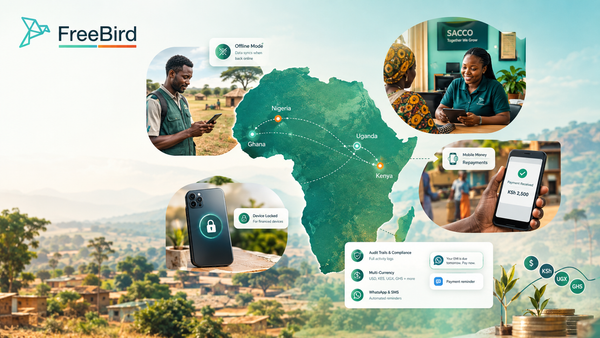
Yes. Freebird includes multi-currency support and is used by lenders in Southeast Asia and South Africa in addition to India. UPI integration is available specifically for Indian lenders.
What is the minimum portfolio size to benefit from loan management software?
Even a lender managing 10 to 20 borrowers benefits from automated reminders and a proper audit trail. The time savings become more significant as the portfolio grows past 50 borrowers — which is typically when manual tracking starts producing errors.
How do automated WhatsApp reminders reduce defaults in microfinance?
Timing matters. A reminder two days before a due date prompts borrowers to arrange payment in advance; a follow-up call two days after a missed payment is damage control. Freebird sends reminders before due dates, not after them — and that difference shows up in repayment rates.
Start With a Live Demo
If your lending operation looks like the one described here — spreadsheets, manual follow-ups, no audit trail — the operational cost is measurable. The question is whether staying with the current process costs more than changing it.
The clearest way to answer that is to see the platform against your actual portfolio size and workflow. Request a live demo at usefreebird.com and walk through the setup with someone who can show you exactly what changes on day one.