The State of Microfinance Technology in Africa in 2026: What Lenders Are Using
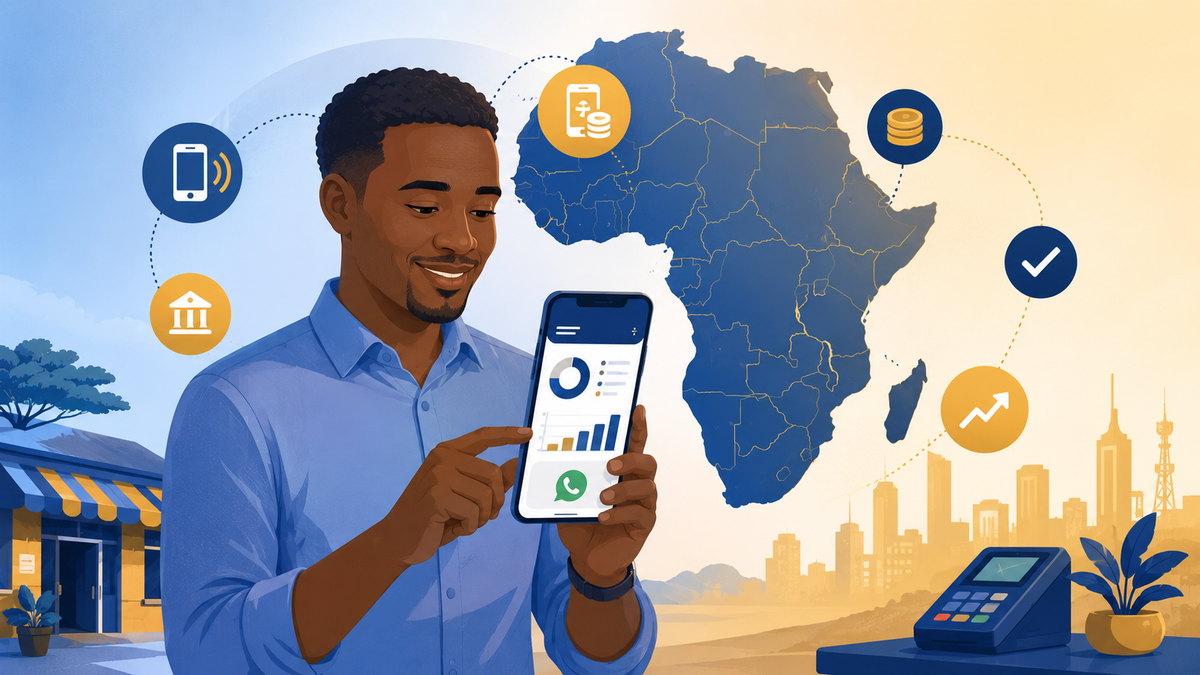
Across sub-Saharan Africa and South Africa, microfinance institutions (MFIs) are running into the same problem at a larger scale than before. Portfolios that once fit inside a paper register or a shared spreadsheet now span hundreds of active borrowers, multiple field agents, and repayment schedules that are genuinely difficult to track without something slipping.
The tools lenders are reaching for in 2026 look very different from what was available five years ago. This article covers what that shift looks like on the ground, which features matter most for African MFIs and consumer lenders, and what to look for when you are evaluating microfinance software for your own operation.
Why African MFIs Are Moving Off Spreadsheets Now
The trigger is rarely dramatic. More often it is a slow accumulation: a missed payment that slipped through because nobody updated the sheet, a field agent keeping their own records in a notebook, a regulatory inquiry that required documentation you could not produce quickly.
For lenders across South Africa, Kenya, Ghana, and Nigeria, 2026 is the year that accumulation hits a tipping point. Portfolios are growing. Regulators are paying closer attention to consumer lending practices. And borrowers increasingly expect to hear from you through channels they already use — primarily WhatsApp.
Spreadsheets were never designed for loan management. They do not send reminders. They do not track field agent visits. They do not generate audit trails. They break when two people edit them at the same time. The question most lenders are asking now is not whether to switch, but what to switch to.
The Features That Matter Most for African Lenders in 2026
WhatsApp-Native Borrower Communication
WhatsApp is the dominant communication channel across most of Africa. For an MFI managing 200 borrowers, sending individual payment reminders by phone takes hours every week — most lending businesses lose 3 to 5 hours a week on manual follow-ups alone.
The tools gaining traction in 2026 send automated reminders via WhatsApp and SMS before a payment is due, not after it is missed. That timing difference matters. A reminder three days before an equated monthly installment (EMI) due date prompts action. A message sent after a missed payment starts a confrontation.
Look for software that treats WhatsApp reminders as a core workflow, not a bolt-on you have to configure separately.
Field Agent Management With Offline Capability
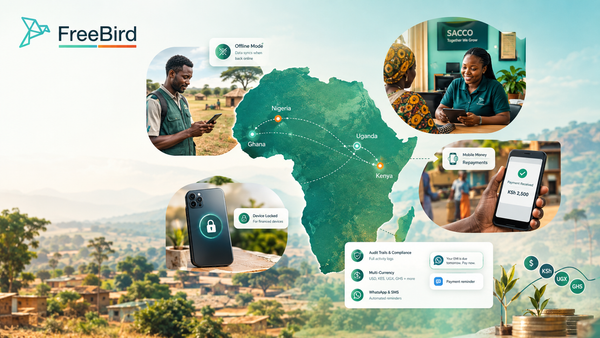
In many parts of Africa, field agents collect repayments in areas with inconsistent mobile data coverage. Software that requires a live internet connection to log a payment is not useful in those conditions.
The practical requirement is an Android app that lets field agents record collections, borrower visits, and notes offline, then syncs when connectivity returns. Without this, you are back to paper records and manual reconciliation at the end of the day.
Android Device Locking for Consumer EMI Lending
This is the feature most specific to the African consumer electronics and device financing market — and the one most lenders do not know exists.
If your business sells smartphones or tablets on installment, the device itself is your collateral. When a borrower stops paying, recovering that device through field visits is expensive, time-consuming, and often impossible.
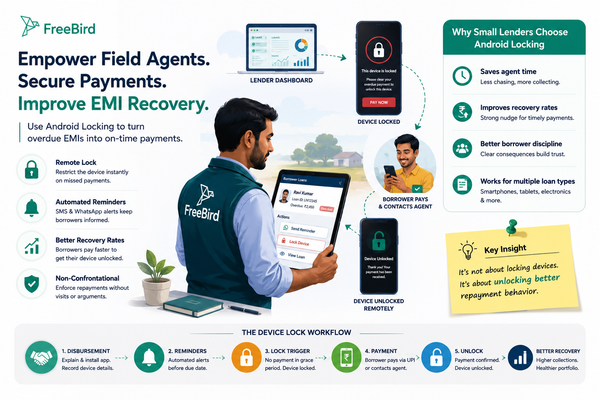
Android device locking solves this differently. The software remotely restricts the borrower's device until the overdue EMI is cleared — no field visit, no confrontation required. The borrower receives a notification, makes the payment, and the device unlocks. No phone call. No agent dispatch.
This feature is available in Africa and is built specifically for consumer electronics lenders and device financing businesses. It changes the risk profile of a device financing portfolio in a way that no other tool currently does.
Compliance-Friendly Reporting and Audit Trails
Regulatory scrutiny on consumer lending is increasing across multiple African markets. If your MFI or lending business is subject to oversight, you need to be able to produce borrower communication logs, repayment histories, and portfolio summaries on demand.
The difference between being prepared for an inquiry and being caught off guard usually comes down to whether your software maintains a complete record automatically, or whether you have to reconstruct it manually from scattered sources.
Look for software that logs every borrower interaction, generates PDF and Excel reports, and keeps that data accessible without requiring a dedicated IT team to extract it.
Multi-Currency Support
For lenders operating across multiple African markets, or any lender whose borrowers transact in a currency that fluctuates, multi-currency support is a practical necessity. Confirm it is included before committing to any platform.
What African MFIs Are Actually Using in 2026
The microfinance software market in Africa ranges from large enterprise platforms built for banks to simple mobile apps designed for informal lenders moving off paper.
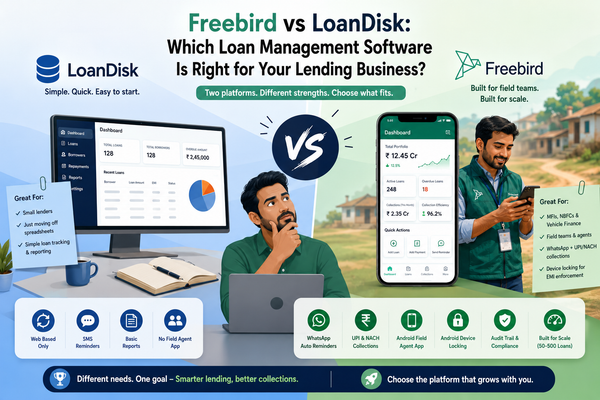
At the enterprise end, platforms like LoanDisk and Lendsqr have established presence in African markets. They offer solid loan tracking and reporting, but their pricing and complexity can be excessive for an MFI managing 50 to 500 borrowers. A lender at that scale does not need a full origination-to-collections suite with a multi-month implementation timeline.
At the informal end, basic loan tracker apps handle simple repayment records but offer little in the way of automated reminders, field agent coordination, or compliance reporting.
The gap in the middle is where most African MFIs actually sit: too large for a basic tracker, too small to justify enterprise software pricing. The tools filling that gap in 2026 are mobile-first platforms that handle the full loan lifecycle, connect to WhatsApp for borrower communication, support field agents working offline, and generate the reporting that regulators expect.
Freebird is built specifically for this segment. It supports lenders managing 10 borrowers up to 1,000 or more on a single platform, with three pricing tiers covering up to 50, up to 500, and unlimited active loans. The platform runs on web, Android, and iOS, with no long-term contracts and a 7-day free trial that requires no credit card.
The Device Locking Advantage for African Consumer Lenders
It is worth being specific about who this feature is for, because it is not relevant to every MFI.
If you run a microfinance operation that issues cash loans for general purposes, device locking does not apply to your business. But if you sell smartphones, tablets, or other Android devices on installment, this feature changes your collections model entirely.
The African consumer electronics market has seen rapid growth in device financing. The challenge has always been enforcement. Repossession is costly. Legal recovery is slow. Phone calls and field visits are time-intensive and do not always produce results.
Remote device locking — Freebird calls this Superkey — gives you a proportionate, low-confrontation enforcement tool that works at scale. When a borrower is overdue, a notification goes out automatically. If the payment is not made, the device restricts to basic functions. When payment clears, the device unlocks. The entire process runs without a single phone call from your team.
No competitor currently offers a comparable mechanism for consumer EMI lending in Africa. For device financing businesses, this is a genuine operational advantage, not a marketing claim.
What to Look for When Evaluating Microfinance Software in Africa
If you are evaluating options right now, here is a practical checklist based on what matters most for African MFI operations in 2026:
- WhatsApp reminders built in — not an add-on that requires separate configuration
- Android field agent app with offline mode — essential for areas with inconsistent connectivity
- Compliance-friendly audit trails — automatic logging of all borrower communications and repayment records
- Multi-currency support — for operations spanning multiple markets
- Android device locking — if you are in consumer electronics or device financing
- No long-term contract requirement — month-to-month billing protects you if your needs change
- Mobile-first design — your team will use it more consistently if it works well on a phone
- A real trial period — a 7-day free trial with no credit card required lets you test before committing
The Compliance Picture Is Changing
Across South Africa and other regulated African markets, the expectation that lenders maintain proper records is not new. What is new is the enforcement. Regulators are increasingly asking for documentation that informal lenders have historically not kept.
An audit trail is not just a compliance checkbox. It is also protection for your business. If a borrower disputes a repayment, or a field agent's records are questioned, a complete communication log and payment history resolves the dispute quickly. Without it, you are relying on memory and manual records.
Microfinance software that maintains these records automatically — without requiring extra steps from your team — removes a significant operational risk from your portfolio.
FAQs
What is microfinance software and why do African MFIs need it in 2026?
Microfinance software manages the full lifecycle of a loan portfolio: borrower records, repayment schedules, payment reminders, collections, and compliance reporting. African MFIs need it in 2026 because portfolios are growing beyond what spreadsheets can handle reliably, regulatory expectations are increasing, and borrowers expect communication through digital channels like WhatsApp.
What features matter most for MFIs operating in Africa?
The most important features are WhatsApp-native payment reminders, an Android field agent app that works offline, compliance-friendly audit trails, multi-currency support, and — for consumer electronics lenders — Android device locking for EMI enforcement.
What is Android device locking and how does it work for consumer lenders in Africa?
Android device locking remotely restricts a borrower's smartphone or tablet when an EMI payment is overdue. The device is limited to basic functions until the payment clears, at which point it unlocks automatically. It is designed for businesses that sell devices on installment and need an enforcement mechanism that does not require field visits or phone calls.
How is Freebird different from other loan management software available in Africa?
Freebird is built for lenders managing 50 to 500 active loans, with WhatsApp-native reminders, an offline-capable Android field agent app, and Superkey device locking for consumer EMI lending. It runs on month-to-month billing with no long-term contracts and includes multi-currency support for African markets. The device locking feature has no direct equivalent among competing platforms.
Is microfinance software affordable for small MFIs in Africa?
Pricing varies by platform and portfolio size. Freebird offers three tiers covering up to 50, up to 500, and unlimited active loans, with a 7-day free trial and no credit card required. Month-to-month billing means you are not locked into an annual contract. Exact pricing is shared during a sales conversation and varies by region and features enabled.
Do African lenders need compliance reporting built into their software?
Increasingly, yes. Regulators across South Africa and other African markets expect lenders to maintain proper documentation of borrower communications and repayment histories. Software that logs these records automatically and exports them in PDF or Excel means you can respond to a regulatory inquiry without scrambling to reconstruct records from scratch.
Can microfinance software handle field agent operations in areas with poor connectivity?
It depends on the platform. Look specifically for an Android app with offline mode, which allows field agents to record collections and borrower visits without a live internet connection and sync when connectivity is restored. Not all platforms offer this, and it is a practical requirement for MFIs operating in rural or semi-urban African markets.
Where to Start
If your MFI or lending business is still running on spreadsheets — or on software that does not send WhatsApp reminders, does not support field agents offline, and does not generate audit trails automatically — that gap is costing you time and increasing your default risk every month.
The right microfinance software does not require a six-month implementation or a dedicated IT team. It should work on the devices your team already uses, connect to the channels your borrowers already use, and give you the reporting your regulators expect.
Request a live demo at usefreebird.com to see how Freebird handles loan management for African MFIs and consumer lenders.