How Mobile Phone Shops Can Offer EMI Financing Without a Bank
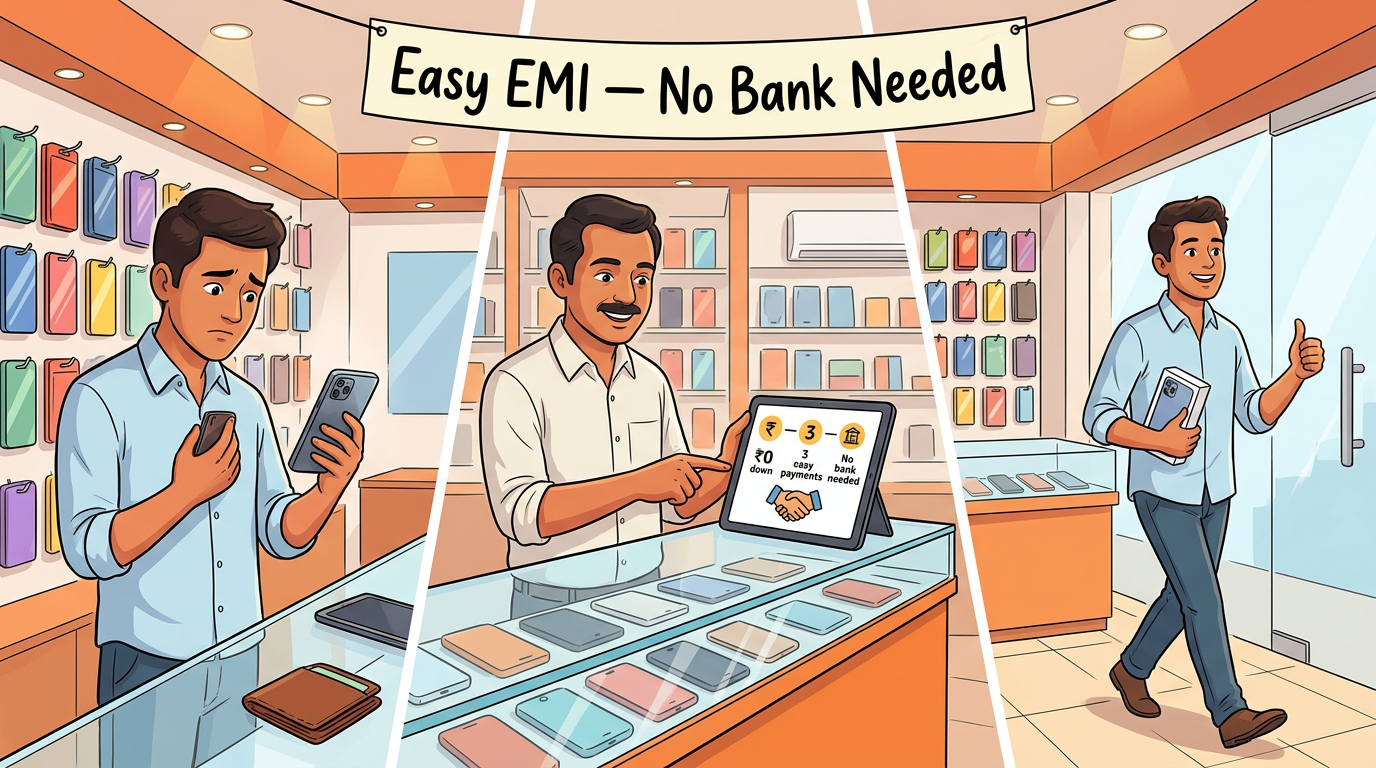
You've seen it happen. A customer walks in, wants the latest smartphone, can't pay the full price upfront, and walks out empty-handed. You lose the sale. They buy from someone else.
Meanwhile, the shop down the road is selling the same device on installment and moving twice the inventory. The difference isn't the product. It's how they handle payment.
Offering EMI (equated monthly installment) financing in-house is one of the most effective ways a mobile phone shop can grow sales, increase average order value, and build a loyal customer base. You don't need a bank partner or an NBFC (non-banking financial company) license to get started. You need a clear process and the right tools to manage it.
This article walks you through how in-house EMI financing works, what the risks look like in practice, and how to manage those risks without spending your evenings chasing borrowers on the phone.
What In-House EMI Financing Actually Means
When a bank or finance company offers device financing, they pay the retailer upfront and collect repayments from the customer directly. You get your money immediately, but you give up a margin to the financier and depend on their approval timelines.
In-house EMI financing flips that model. You extend credit directly to the customer. They pay you back in monthly installments over a fixed period — typically 3 to 12 months. You earn the full margin on the device, and in many cases you can charge a small processing fee or interest on top.
The obvious risk is default. If a customer stops paying after month two, you're holding a used device you can't easily resell at full price. That's the problem that stops most small retailers from trying this model.
But that risk is manageable, and plenty of small shops are running this profitably today.
Why This Works for Small Retailers
Banks and large finance companies focus on high-volume, standardized lending. They're not interested in a Rs. 8,000 phone financed over six months to a first-time borrower with no credit history. That customer is yours.
You already have the relationship. You know the neighborhood. You can assess creditworthiness informally in ways a bank algorithm never could — you see who comes back to your shop, who pays on time, and who you trust.
In-house financing lets you serve that customer, earn the full device margin, and build a repayment relationship that brings them back for the next upgrade.
The shops that struggle with this model aren't failing because the concept is flawed. They're failing because they're managing everything manually — sending WhatsApp reminders themselves, tracking payments in a spreadsheet, and having no real way to enforce repayment when a borrower goes quiet.
The Real Problems: Defaults, Manual Follow-Ups, and No Enforcement
If you're managing 20 to 50 financed devices today, you already know the pain points.
Tracking is a mess. A spreadsheet works at 10 borrowers. At 40, you're spending an hour every week just figuring out who paid, who didn't, and what's still outstanding. At 100, it breaks entirely.
Follow-ups eat your time. Sending individual WhatsApp messages to remind borrowers about upcoming EMIs isn't a business process. It's a part-time job you didn't sign up for.
Defaults are hard to recover. Once a borrower has the device and stops paying, your options are limited — call them, visit them, or write off the loss. None of those are good options.
These three problems are why most small retailers either avoid EMI financing or cap it at a handful of trusted customers. The ceiling isn't demand. It's the operational capacity to manage it.
How to Structure Your In-House EMI Program
Before you think about software, get the basics right.
Set clear terms upfront. Decide your installment periods (3, 6, or 12 months), whether you charge interest or a flat processing fee, and what happens if a payment is missed. Write it down and have the customer sign it. A simple one-page agreement is enough.
Collect a down payment. A down payment of 20 to 30 percent reduces your risk immediately. It filters out borrowers who aren't serious and lowers the outstanding balance you're exposed to.
Verify identity and contact details. Collect the borrower's Aadhaar or government ID, phone number, and a secondary contact. You need a way to reach them if they go quiet.
Start small. Finance 10 to 15 devices before scaling. Learn your default rate, your collection patterns, and which customer profiles pay reliably. Then expand.
Once you have a process, the next step is making it manageable at scale.
Managing EMI Financing Without Drowning in Admin
This is where most small retailers hit a wall. The process works, but administering 50, 80, or 150 active loans becomes overwhelming without a proper system.
You need four things working together: a way to track every loan and borrower, automated reminders before EMIs are due, a simple way to collect payments digitally, and an enforcement mechanism for when someone stops paying.
Loan and Borrower Tracking
Every financed device needs a record — the borrower's details, the device IMEI number, the loan amount, the installment schedule, and the payment history. When a borrower calls asking about their outstanding balance, you should be able to pull that up in seconds.
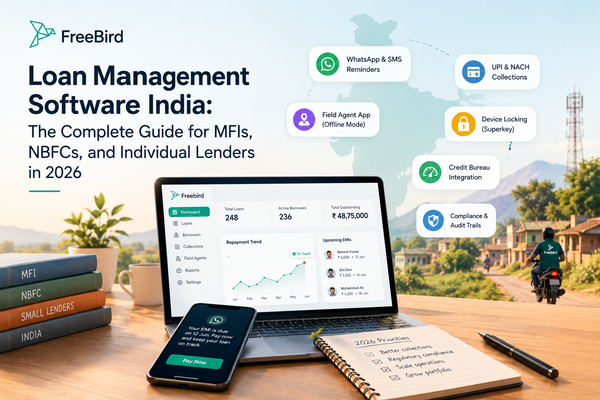
A proper loan management system gives you a dashboard showing every active loan, which payments are current, and which are overdue. You stop relying on memory or a spreadsheet that's three days out of date.
Automated WhatsApp and SMS Reminders
The most effective way to reduce late payments is to remind borrowers before their EMI is due, not after they've already missed it. A reminder sent two days before the due date, followed by one on the due date itself, cuts down on defaults that happen simply because the borrower forgot.
Sending those reminders manually for 80 borrowers every month isn't realistic. Automated WhatsApp reminders sent directly from the borrower's loan record mean the follow-up happens without you lifting a finger.
UPI Payment Collection
The easier you make it for borrowers to pay, the more of them will pay on time. A UPI payment link sent with the reminder message means the borrower can settle their EMI in 30 seconds from their phone — no cash handling, no trip to your shop, no friction.
Device Locking: The Enforcement Tool That Changes the Equation
This is the feature that makes in-house EMI financing genuinely viable for mobile phone retailers.
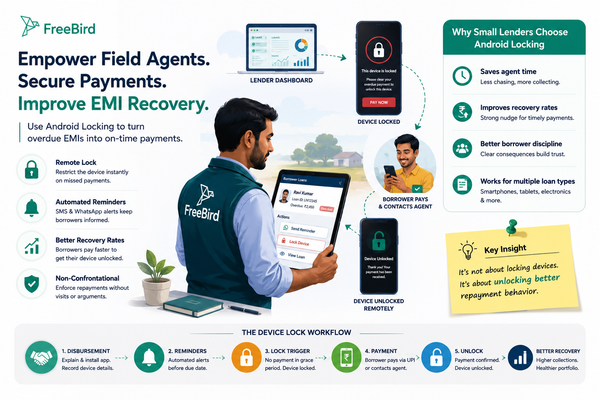
Freebird's Superkey feature lets you remotely lock a borrower's Android device when an EMI payment is overdue. The device doesn't stop working entirely, but it's restricted enough that the borrower is strongly motivated to clear the payment. Once they pay, you unlock the device remotely. No confrontation, no collection calls, no chasing.
No other loan management platform offers this. Superkey is built specifically for consumer electronics and device financing businesses, and it addresses the single biggest risk in the in-house EMI model: what happens when a borrower decides to stop paying.
With device locking in place, your recovery rate on overdue accounts improves significantly. Borrowers know the device can be restricted — and that knowledge alone changes repayment behavior before a single payment is missed.
Superkey works on Android devices, which covers the vast majority of smartphones sold in the mid-range and budget segments. Those are exactly the devices most commonly financed by small retailers.
What a Managed EMI Operation Actually Looks Like Day-to-Day
Here's what the workflow looks like when you have the right system in place.
A customer buys a phone on a six-month EMI plan. You create their loan record in the system, enter the device IMEI, and set the installment schedule. Superkey is activated on their device at the point of sale.
Five days before each EMI is due, the system sends an automated WhatsApp reminder with a UPI payment link. On the due date, a second reminder goes out. Most borrowers pay within 24 hours of that first message.
For the ones who don't pay, the system flags the loan as overdue. Every overdue account shows up on your dashboard in one view. If the account stays unpaid past your grace period, you restrict the device remotely through Superkey. The borrower gets a notification. Most pay within hours.
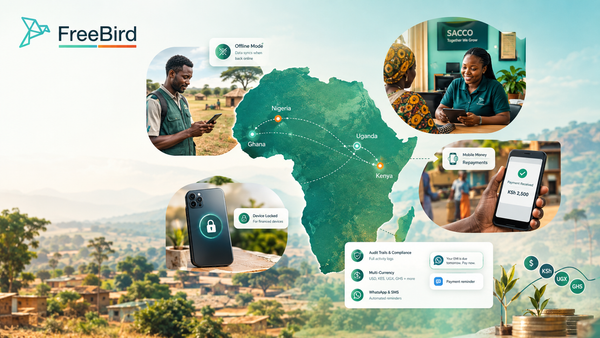
Your field agent, if you have one, handles the cases that need a physical visit. The Android field agent app works offline, so they can update loan records and collect payments even in areas with poor connectivity.
At the end of the month, you export a repayment report in PDF or Excel. You know exactly what you collected, what's outstanding, and where your portfolio stands.
That's what managing 100 to 200 financed devices looks like when the administration is handled by software instead of by you.
What to Look for in EMI Financing Software for Retailers
Most loan management platforms are built for banks, large NBFCs, or microfinance institutions with dedicated IT teams and compliance departments. They're not built for a mobile phone shop.
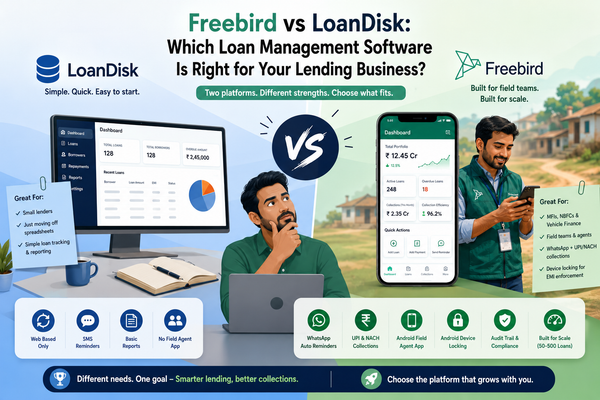
For a retailer managing device financing, you need something that's fast to set up, works on mobile, handles WhatsApp reminders natively, supports UPI collection, and includes device locking. It also needs to be priced for 50 to 200 active loans — not for an institution managing thousands.
Freebird is built for exactly this scale. The Lite plan covers up to 50 active loans. The Professional plan covers up to 500. There's a 7-day free trial with no credit card required, and billing is month-to-month with no long-term contract. You can request a live demo to see the Superkey feature and the borrower tracking dashboard before committing to anything.
Common Questions Before Getting Started
Do I need an NBFC license to offer EMI financing? Regulatory requirements for informal lending vary by country and by the scale of your operation. In India, small retailers offering installment sales on their own products operate in a different regulatory category than registered NBFCs. If you're scaling to a significant portfolio, consult a legal or compliance professional in your market.
What if the borrower sells the device? This is a real risk. Collecting a down payment, holding the original invoice, and activating Superkey at the point of sale reduces it considerably. A device that can be remotely restricted is much harder to resell at full value.
What about borrowers who don't use WhatsApp? SMS reminders work as a fallback. The system can send both, so no borrower falls through the gap.
FAQs
What is in-house EMI financing for mobile phone shops? In-house EMI financing means the retailer extends credit directly to the customer instead of routing the transaction through a bank or finance company. The customer pays back the device cost in monthly installments to the shop. The retailer earns the full margin and controls the repayment terms.
Do I need a bank or NBFC to offer EMI on phones? No. Small retailers can offer installment sales directly to customers without a bank or NBFC partner. You set the terms, collect the payments, and manage the portfolio yourself. The regulatory requirements depend on your country and the scale of your lending activity.
What is Superkey and how does it help with EMI defaults? Superkey is Freebird's Android device-locking feature. When a borrower's EMI payment is overdue, you can remotely restrict their device through the platform. The restriction lifts as soon as the payment clears. It's the most direct enforcement tool available for consumer electronics lenders, and no other loan management platform currently offers an equivalent.
How many financed devices can I manage with Freebird? Freebird's plans cover up to 50 active loans (Lite), up to 500 (Professional), and unlimited (Team). A 7-day free trial is available with no credit card required.
What payment methods can borrowers use to repay? Freebird supports UPI payment collection in India, which means borrowers can pay directly from a WhatsApp reminder message using any UPI app. This removes friction from the repayment process and reduces late payments.
Can I see overdue accounts without checking every loan manually? Yes. The Freebird dashboard shows all active loans, upcoming EMIs, and overdue accounts in one view. You don't need to open individual records to see where your portfolio stands.
Does Freebird work for small retailers, or is it only for large lenders? Freebird is built for lenders managing anywhere from 10 borrowers to 1,000 or more. The pricing tiers and mobile-first design are specifically suited to small and mid-sized operations, including mobile phone shops and electronics retailers running their own device financing.
Start Managing Your EMI Portfolio Properly
In-house EMI financing is a real growth lever for mobile phone shops. The demand is there. The margin is there. The challenge is managing repayments without defaults eating into your profit.
Automated WhatsApp reminders, UPI collection, borrower tracking, and Superkey device locking give you a complete system for running a device financing business at scale. Less time chasing payments. More time selling.
Request a live demo at usefreebird.com to see how the platform handles the full EMI lifecycle — from loan setup to device locking to repayment tracking.